

- HOME
- CORPORATE
- PORTFOLIO
- PRODUCTS
- SERVICES
- CLIENTS
- CONTACT US
- MORE

Fire Immuniser
+91-7829629111
Email: info@variex.in
Varistor Technologies Pvt. Ltd.
Block-1, First Floor, Ardente Office One, Hoodi Circle, ITPL Main Road, Bengaluru, Karnataka 560048, IN
A Complete Guide to Fire Suppression System Refilling
A Complete Guide to Fire Suppression System Refilling
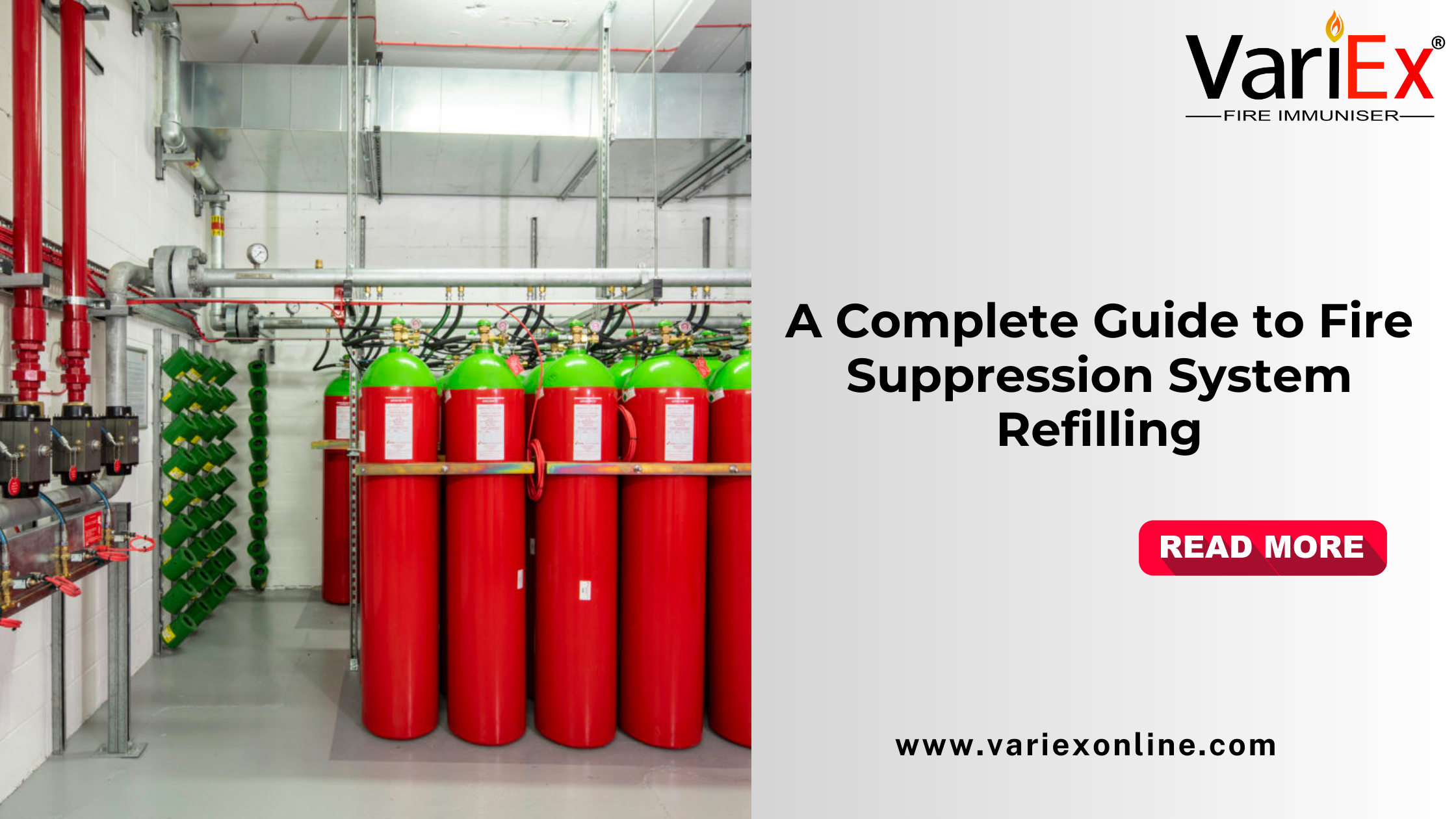
Fire suppression systems play a crucial role in safeguarding lives, property, and critical assets during emergencies. Refilling these systems is an essential part of their maintenance to ensure they remain functional when needed. This guide provides an in-depth look into fire suppression system refilling, including when to do it, how it's done, costs involved, and much more.
What Is Fire Suppression System Refilling?
Fire suppression system refilling involves replenishing the extinguishing agent used to suppress fires. This agent can be chemical, gas-based (like CO2), or water-based, depending on the type of system. Over time, usage, leakage, or degradation necessitates refilling to keep the system operational.
Why Is Fire Suppression System Refilling Important?
- Operational Efficiency: Ensures the system is ready to respond effectively in emergencies.
- Compliance with Regulations: Meets safety standards required by authorities and insurance providers.
- Prolongs System Lifespan: Regular maintenance, including refilling, extends the life of the suppression system.
- Avoids Malfunction: Prevents issues like low pressure or insufficient agent levels.
Signs Your Fire Suppression System Needs Refilling
- Pressure Drop: Indicated by the pressure gauge.
- System Discharge: If the system has been activated, refilling is mandatory.
- Regular Maintenance Check: During scheduled inspections, technicians may detect low agent levels.
- Visible Damage or Leaks: Signs of leakage or corrosion in cylinders.
Types of Fire Suppression Systems and Refilling Requirements
| Type of System | Extinguishing Agent | Refilling Frequency | Special Considerations |
|---|---|---|---|
| CO2 Fire Suppression Systems | Carbon Dioxide | After discharge or leakage | Ensure cylinders are inspected for pressure loss. |
| Chemical-Based Systems | Dry or Wet Chemical Agents | Every 1-3 years or after use | Test agent concentration regularly. |
| Water-Based Systems | Water | As needed during inspection | Maintain pressure levels and clean nozzles. |
| FM-200 and Clean Agent Systems | Hydrofluorocarbon (HFC) Gases | After use or every 10 years | Monitor environmental impact and leakage. |
How to Refill a Fire Suppression System
-
Inspection and Diagnosis:
- Technicians inspect the system to identify issues such as leaks or pressure drops.
- Gauges and cylinders are checked for wear and tear.
-
Emptying Residual Agent:
- The remaining extinguishing agent is carefully removed, adhering to safety protocols.
-
Cleaning and Repair:
- Cylinders and components are cleaned and repaired if necessary.
-
Refilling Process:
- The system is refilled with the correct extinguishing agent in the required quantity.
-
Testing and Certification:
- After refilling, the system undergoes a pressure test and functionality check.
- A certificate is issued to confirm compliance with regulations.
Costs of Fire Suppression System Refilling
The cost of refilling a fire suppression system varies based on factors such as:
- Type of System: CO2 and clean agent systems are generally more expensive to refill than water-based systems.
- System Size: Larger systems require more agent, increasing the cost.
- Service Provider: Rates vary depending on the provider’s expertise and location.
| System Type | Average Cost |
|---|---|
| CO2 Systems | $200 - $1,000 per cylinder |
| Chemical-Based Systems | $300 - $800 per recharge |
| Water-Based Systems | $150 - $500 per service |
| Clean Agent Systems (FM-200) | $1,000 - $3,000 per recharge |
DIY vs. Professional Refilling: Which Is Better?
| Aspect | DIY Refilling | Professional Refilling |
|---|---|---|
| Cost | Lower upfront cost | Higher but includes inspection and testing |
| Safety | Risk of improper handling | Adheres to safety protocols |
| Compliance | May not meet legal standards | Fully compliant with regulations |
| Expertise | Requires technical knowledge | Handled by certified technicians |
Common Mistakes to Avoid During Refilling
- Using Incorrect Agents: Always match the agent with the system type.
- Skipping Inspections: Neglecting inspection can lead to undetected leaks.
- Ignoring Regulations: Non-compliance can result in fines and increased liability.
- Overfilling or Underfilling: Improper agent levels compromise system efficiency.
- Choosing Unqualified Providers: Work with certified professionals to ensure quality.
How Often Should Fire Suppression Systems Be Refilled?
The frequency of refilling depends on the system type, usage, and manufacturer guidelines. As a rule of thumb:
- CO2 and Clean Agent Systems: After every discharge or as per inspection.
- Chemical-Based Systems: Every 1-3 years.
- Water-Based Systems: During regular maintenance or as needed.
Benefits of Regular Refilling
- Enhanced Safety: Reduces the risk of system failure during emergencies.
- Regulatory Compliance: Meets local fire safety codes.
- Cost Savings: Prevents costly repairs caused by neglect.
- Peace of Mind: Ensures the system is always ready to protect lives and property.
Conclusion
Refilling your fire suppression system is not just a regulatory requirement but also a critical step in maintaining fire safety. Regular inspections, timely refilling, and adherence to best practices ensure that your system remains functional and reliable. Always work with certified professionals for refilling to guarantee compliance and safety.

Frequently Asked Questions
It depends on the system type. Most systems need refilling after discharge or during regular inspections (1-3 years for chemical systems).
While possible, it’s not recommended. Professional refilling ensures compliance, safety, and proper handling of extinguishing agents.
Failure to refill can lead to system malfunction, regulatory fines, and increased fire risks.
Costs range from $150 to $3,000, depending on the system type, size, and agent required.
Yes, clean agents like FM-200 are environmentally friendly and widely used in modern systems.
Buy Fire Extinguishers Online ----------------------
Check Our Complete Fire Extinguishers Price List.

Final Say
At VariEx.in and VariexOnline.com, we specialize in supplying and installing top-quality fire fighting systems and equipment. From fire extinguishers to advanced suppression systems, we offer comprehensive solutions tailored to your needs. Our experienced team ensures precise installation and maintenance for optimal safety.
Trust VariEx for reliable fire protection. Contact us online or call 7829629111 to learn more.
We specialize in manufacturing, supplying, and distributing a comprehensive range of fire fighting equipment, including state-of-the-art fire extinguishers. Read our most searched blogs and find interesting information on topics such as how to use a fire extinguisher, how to calculate fire fighting water tank capacity, fire extinguisher refilling, obtaining a Fire NOC, understanding fire fighting systems, types of fire protection systems, the fire hydrant system, and the fire sprinkler system. These resources provide essential knowledge for ensuring safety and compliance with fire safety regulations. Additionally, you can explore guides on the maintenance of fire protection equipment, the latest advancements in fire safety technology, and best practices for fire risk assessment and management.
Our expertise extends to fire alarm systems, fire hydrant systems, and fire suppression systems, including fire sprinklers. Each product meets rigorous international standards for reliability and performance, ensuring effective fire safety products tailored to diverse applications and industries. Additionally, we are providing Fire Extinguisher Refilling and AMC services to ensure ongoing maintenance and operational readiness of fire safety equipment.
"WHAT YOU CAN READ NEXT"
 Read more +24 November 2023 in Fire Extinguisher
What types of fire extinguishers are available for different fire classes?
 Read more +02 May 2026 in Fire Extinguisher
Class B Fire Extinguisher Uses, Types, Price & Buying Guide
 Read more +30 April 2026 in ABC Fire Extinguisher, AMC Services, CO2 Fire Extinguisher, Fire Extinguisher, Fire Fighting System, FIre Hydrant, Fire Safety Equipment, Fire Safety Equipment
This is a very well-written and informative post. It gives a thorough look at the importance of maintaining fire suppression systems and the steps involved in refilling them.
I especially appreciate how the article emphasizes the difference between water based fire suppression system and clean agent systems. It’s very clear that water-based systems are more straightforward in terms of refilling and maintenance, while clean agent systems like FM-200 fire suppression system or NOVEC 1230 fire suppression system require stricter handling, proper leak monitoring, and certified service. The article correctly points out that FM 200 fire suppression systems must be checked for leakage, and refilling should follow manufacturer standards.
One suggestion: it would be helpful if the blog also addressed regional pricing and availability. In markets like Pakistan, people often ask about FM 200 Fire Suppression System price in Pakistan. If the post included a ballpark figure or links to suppliers in Pakistan it would be even more useful. Also mentioning how automatic fire suppression system Pakistan options are changing with local regulations would connect with readers in South Asia.
The coverage of kitchen fire suppression system is somewhat indirect in the article, but it is such a critical application. A kitchen typically demands specialized systems (for oil and grease fires) which sometimes combine wet chemical agents and automatic mechanisms. It would strengthen the post to compare how a kitchen fire suppression system differs from standard clean agent systems or water systems in method, refilling, and cost.
Overall I think this guide is a very good resource especially for facility managers, safety engineers, or businesses considering installing or maintaining fire protection. It balances technical detail with readability. I hope you continue to add more local context (e.g. Pakistan, South Asia) and case studies (for instance, how automatic fire suppression system Pakistan installations work in real life).
https://firesafetytrading.com.pk/fire-suppression-system/
https://firesafetytrading.com.pk/water-based-fire-suppression-system/
https://firesafetytrading.com.pk/novec-1230-fire-suppression-system/
https://firesafetytrading.com.pk/fm-200-fire-suppression-system-in-pakistan/
https://firesafetytrading.com.pk/kitchen-fire-suppression-system/