
- HOME
- CORPORATE
- PORTFOLIO
- PRODUCTS
- SERVICES
- CLIENTS
- CONTACT US
- MORE

Fire Immuniser
+91-7829629111
Email: info@variex.in
Varistor Technologies Pvt. Ltd.
Block-1, First Floor, Ardente Office One, Hoodi Circle, ITPL Main Road, Bengaluru, Karnataka 560048, IN
Why DLP Tubing Refilling Must Be Part of Your Checklist
Why DLP Tubing Refilling Must Be Part of Your Checklist
In the world of fire safety, where prevention is always better than reaction, a well-maintained suppression system can be the difference between minor disruption and catastrophic loss. Among the unsung heroes of modern fire protection is the Direct Low Pressure (DLP) fire suppression system, powered by advanced thermoplastic tubing. Yet, one of the most overlooked aspects of maintaining this system is DLP tubing refilling.
Whether you manage a data center, warehouse, or critical infrastructure, this guide explains why DLP tubing refilling should be a mandatory item on your fire safety checklist, and how neglecting it can put your property and personnel at risk.
What Is DLP Tubing Refilling?
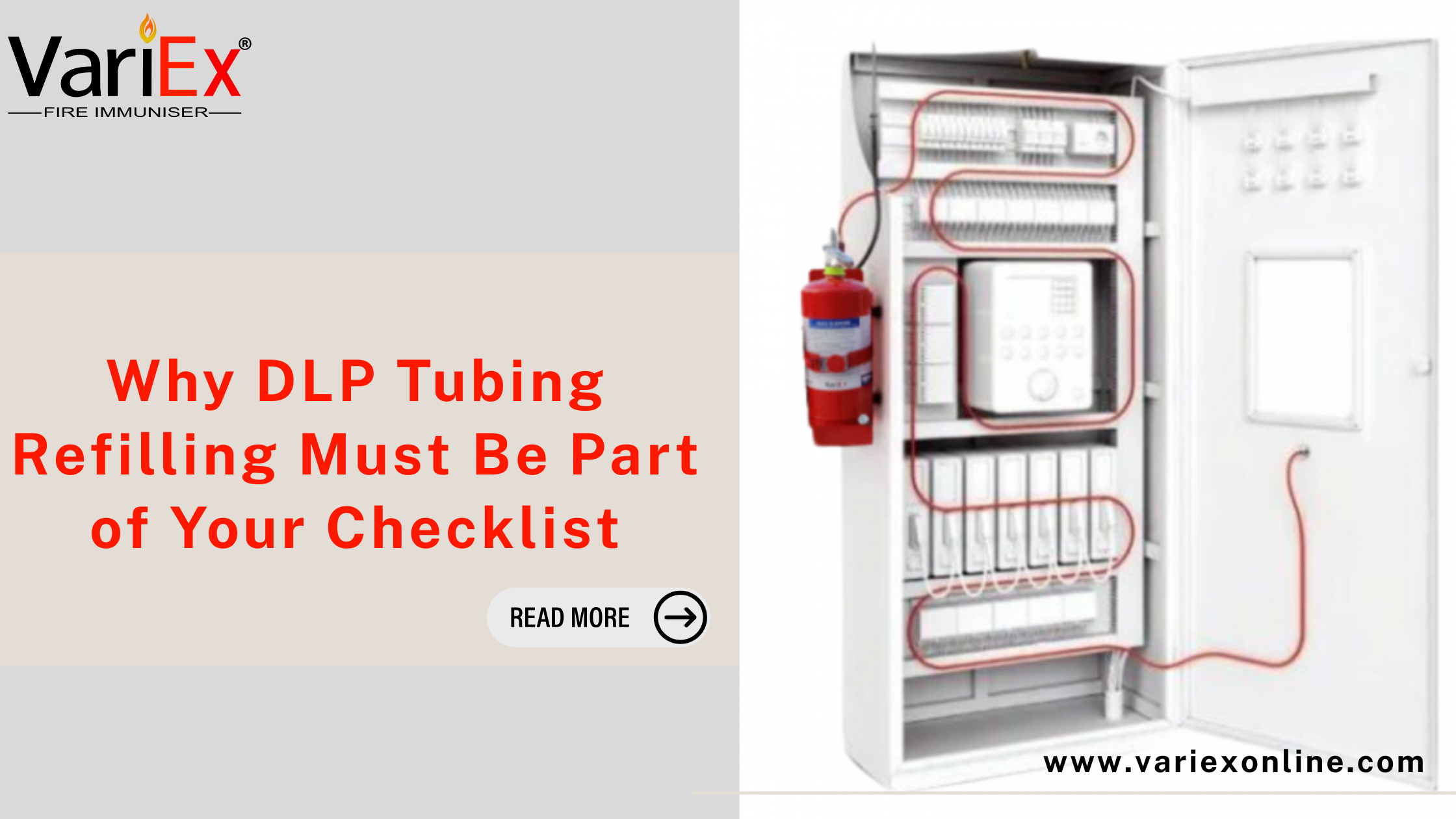
DLP systems rely on specialized tubing to detect and deliver clean agent fire suppression at the exact location of the fire. These flexible tubes run through the protected space and are pre-filled with a pressurized gas or liquid suppressant. When exposed to high heat, the tubing ruptures and releases the agent to extinguish the fire.
DLP tubing refilling is the process of restoring the system’s pressure and agent levels after:
-
A discharge event
-
Routine maintenance
-
System reconfiguration
-
Leak detection or degradation
Without proper and timely refilling, the system becomes ineffective—leaving you exposed.
Why Is DLP Tubing Refilling Critical for Fire Safety Compliance?
Failing to include tubing refilling in your fire safety schedule can result in:
-
Non-compliance with NFPA 2001 and ISO 14520
-
Increased insurance premiums
-
Exposure to legal liability
-
Higher risk of system failure in emergencies
Compliance doesn’t just protect assets—it ensures operational continuity and meets occupational safety standards.
How Often Should DLP Tubing Be Refilled?
| Condition | Refilling Frequency |
|---|---|
| After System Discharge | Immediately |
| Routine Maintenance | Every 6–12 months |
| Detected Pressure Drop | Upon detection |
| High-Temperature Environments | Every 6 months or less |
| Harsh Industrial Settings | Per manufacturer’s recommendation |
Keeping track of this schedule ensures that your DLP system is always ready when it’s needed most.
What Happens If You Skip DLP Tubing Refilling?
Neglecting tubing refilling can result in:
-
Total system failure during a fire event
-
Void warranties and maintenance contracts
-
Corrosion or tubing damage from contaminants or residual agent
-
Unidentified pressure leaks, leading to slow agent depletion
-
Delayed suppression response, increasing damage potential
The cost of neglect can far outweigh the cost of routine refilling.
Key Benefits of Adding DLP Tubing Refilling to Your Safety Checklist
✅ 1. Ensures 24/7 Fire Readiness
Properly refilled tubing maintains the system in an always-ready state, critical in areas like server rooms or control panels where fire risk is constant.
✅ 2. Protects High-Value Equipment
DLP systems are often installed to protect expensive electronics and machinery. A non-operational system can result in millions of dollars in losses.
✅ 3. Maintains System Integrity
Agent pressure degradation can lead to uneven distribution or failure to suppress fires at the point of origin. Timely refills maintain optimal function.
✅ 4. Supports Predictive Maintenance
Including refilling as part of your inspection protocol allows technicians to identify and prevent small issues before they become costly failures.
✅ 5. Avoids Regulatory Penalties
In many jurisdictions, skipping routine system maintenance—including tubing refilling—can result in fines or shutdown orders from fire safety inspectors.
Cost of DLP Tubing Refilling vs. System Failure
| Scenario | Estimated Cost |
|---|---|
| Routine DLP Tubing Refilling | ₹17,161–₹42,903 per visit |
| Suppression System Failure | ₹42,90,376–₹171 million in damages |
| Fire Code Violation Fines | ₹4,29,044–₹17,16,190 per incident |
| Insurance Denial Post-Fire | Full claim amount (denied) |
Clearly, preventative maintenance like refilling isn’t an expense—it’s an investment in risk mitigation.
Who Should Handle DLP Tubing Refilling?
Refilling must be performed by certified fire suppression technicians trained to:
-
Use manufacturer-recommended refill kits and clean agents
-
Inspect for tubing wear or stress damage
-
Conduct pressure and leak tests
-
Calibrate system pressure to OEM standards
Avoid DIY attempts, as incorrect pressure levels can damage the tubing or trigger false discharges.
Checklist: When to Refill DLP Tubing
To simplify inclusion in your fire safety maintenance plan, use the following checklist:
-
Was there a recent fire discharge?
-
Has it been more than 12 months since the last refill?
-
Is the pressure gauge reading below nominal level?
-
Have you observed slow pressure decay?
-
Have there been environmental changes (temperature, humidity)?
-
Has your facility layout changed or equipment moved?
If you checked any of the above, your system likely needs refilling now.
Best Practices for Technicians During Refilling
| Best Practice | Why It Matters |
|---|---|
| Use leak-proof connectors | Prevents agent loss |
| Test pressure 24 hours after refilling | Confirms seal integrity |
| Replace worn or damaged tubing sections | Extends system life |
| Label and log all maintenance activities | Helps in audits and compliance checks |
| Wear PPE and follow gas safety protocols | Ensures technician safety |
Technician discipline ensures both system reliability and job safety.
Signs of a System That Needs Refilling
-
Audible hissing or agent smell
-
Visual indicator lights on the control panel
-
Increased fire system downtime or alerts
-
Absence of pressure on manual inspection
-
Tubing discoloration or visible cracking
Ignoring these signs invites disaster.
Integration with Fire Safety Management Systems
Modern buildings now use integrated safety dashboards to track:
-
Tubing pressure levels
-
Last refill date
-
System activation history
-
Upcoming maintenance deadlines
DLP tubing refilling can be digitally scheduled, monitored, and verified—helping you stay organized and inspection-ready.
Conclusion
Adding DLP tubing refilling to your fire safety checklist isn’t just a best practice—it’s a life-saving measure that supports safety, compliance, and business continuity. The low cost and minimal time investment required for refilling pale in comparison to the damage and liability risks associated with system failure.
Incorporate this simple yet vital task into your regular maintenance regime, and you’ll be taking a proactive step toward total fire safety preparedness.

Frequently Asked Questions
Check the pressure gauge regularly, and refill after any discharge or as part of your scheduled maintenance (every 6–12 months).
No, only manufacturer-approved agents like FM-200 or Novec 1230 should be used to avoid damaging the system.
Most professional service contracts include refilling, but it’s best to verify the terms.
Yes. Failure to maintain your system, including tubing refills, can result in insurance claim denial after a fire.
On average, a professional refill takes 30–45 minutes, including inspection and leak testing.
Buy Fire Extinguishers Online ----------------------
Check Our Complete Fire Extinguishers Price List.

Final Say
At VariEx.in and VariexOnline.com, we specialize in supplying and installing top-quality fire fighting systems and equipment. From fire extinguishers to advanced suppression systems, we offer comprehensive solutions tailored to your needs. Our experienced team ensures precise installation and maintenance for optimal safety.
Trust VariEx for reliable fire protection. Contact us online or call 7829629111 to learn more.
We specialize in manufacturing, supplying, and distributing a comprehensive range of fire fighting equipment, including state-of-the-art fire extinguishers. Read our most searched blogs and find interesting information on topics such as how to use a fire extinguisher, how to calculate fire fighting water tank capacity, fire extinguisher refilling, obtaining a Fire NOC, understanding fire fighting systems, types of fire protection systems, the fire hydrant system, and the fire sprinkler system. These resources provide essential knowledge for ensuring safety and compliance with fire safety regulations. Additionally, you can explore guides on the maintenance of fire protection equipment, the latest advancements in fire safety technology, and best practices for fire risk assessment and management.
Our expertise extends to fire alarm systems, fire hydrant systems, and fire suppression systems, including fire sprinklers. Each product meets rigorous international standards for reliability and performance, ensuring effective fire safety products tailored to diverse applications and industries. Additionally, we are providing Fire Extinguisher Refilling and AMC services to ensure ongoing maintenance and operational readiness of fire safety equipment.
"WHAT YOU CAN READ NEXT"
 Read more +24 November 2023 in Fire Extinguisher
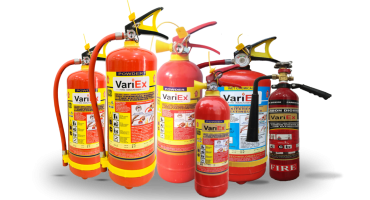
What types of fire extinguishers are available for different fire classes?
 Read more +02 May 2026 in Fire Extinguisher
Class B Fire Extinguisher Uses, Types, Price & Buying Guide
 Read more +30 April 2026 in ABC Fire Extinguisher, AMC Services, CO2 Fire Extinguisher, Fire Extinguisher, Fire Fighting System, FIre Hydrant, Fire Safety Equipment, Fire Safety Equipment