
- HOME
- CORPORATE
- PORTFOLIO
- PRODUCTS
- SERVICES
- CLIENTS
- CONTACT US
- MORE

Fire Immuniser
+91-7829629111
Email: info@variex.in
Varistor Technologies Pvt. Ltd.
Block-1, First Floor, Ardente Office One, Hoodi Circle, ITPL Main Road, Bengaluru, Karnataka 560048, IN
Why Are Fire Alarm System Required
Why Are Fire Alarm System Required
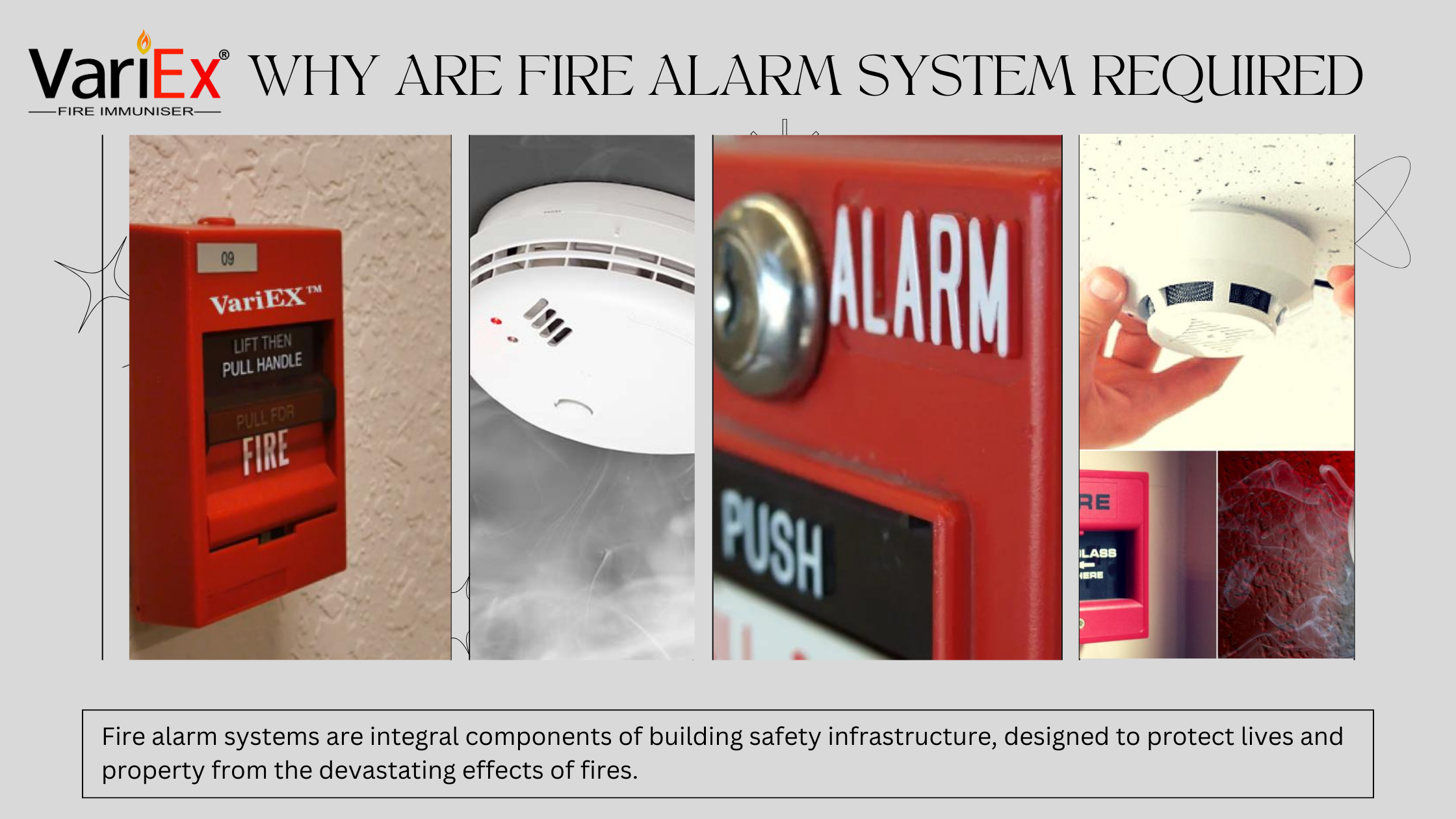
Fire alarm systems are integral components of building safety infrastructure, designed to protect lives and property from the devastating effects of fires. Their importance cannot be overstated, and their presence in residential, commercial, and industrial settings is mandated by various fire safety regulations worldwide. This comprehensive exploration delves into the reasons why fire alarm systems are essential, covering the following key aspects:
- Life Safety
- Property Protection
- Early Detection and Warning
- Regulatory Compliance
- Insurance Requirements
- Cost-Effective Fire Management
- Peace of Mind
- Technological Advancements and Integration
- Case Studies and Real-World Examples
1. Life Safety
The primary purpose of a fire alarm system is to protect human life. Fires can spread rapidly, producing toxic smoke and gases that can incapacitate or kill occupants before they are even aware of the danger. Fire alarm systems are designed to detect fires at their earliest stages, providing an early warning that allows people to evacuate safely.
- Rapid Evacuation: In the event of a fire, every second counts. Fire alarm systems alert occupants immediately, giving them precious time to escape.
- Smoke Detection: Many modern fire alarms are equipped with smoke detectors that can sense the presence of smoke even before flames are visible, ensuring early intervention.
- Audible and Visual Alerts: Fire alarms provide loud, unmistakable sounds and visual cues (such as flashing lights) to ensure that everyone in the building is aware of the danger, including those who may be hearing impaired or in noisy environments.
2. Property Protection
Fire can cause extensive damage to buildings and their contents. A robust fire alarm system helps to minimize property damage by enabling quick response from fire services.
- Early Detection: The sooner a fire is detected, the quicker it can be extinguished, reducing the extent of damage.
- Activation of Fire Suppression Systems: Many fire alarm systems are integrated with sprinkler systems or other fire suppression mechanisms, which can activate automatically to contain and extinguish fires.
- Minimizing Losses: By reducing the spread of fire, alarm systems help protect valuable assets, including equipment, inventory, and critical documents.
3. Early Detection and Warning
Fire alarm systems are designed to detect fires at their earliest stages, often before they are visible or produce significant heat. This early detection is crucial for several reasons:
- Preventing Fire Spread: Early detection allows for quick response, preventing the fire from spreading to other areas of the building.
- Reducing Injuries and Fatalities: By alerting occupants early, fire alarm systems significantly reduce the risk of injuries and fatalities.
- Supporting Emergency Responders: Early alerts give firefighters a head start, allowing them to address the fire more effectively and safely.
4. Regulatory Compliance
Building codes and fire safety regulations mandate the installation and maintenance of fire alarm systems in various types of structures. Compliance with these regulations is essential for several reasons:
- Legal Requirements: Many jurisdictions have strict fire safety laws that require the installation of fire alarm systems in residential, commercial, and industrial buildings.
- Avoiding Penalties: Failure to comply with fire safety regulations can result in hefty fines, legal liabilities, and even the closure of the building.
- Ensuring Safety Standards: Regulatory compliance ensures that buildings meet the necessary safety standards to protect occupants and property.
5. Insurance Requirements
Insurance companies often require buildings to have functional fire alarm systems as a condition for providing coverage. This requirement serves multiple purposes:
- Risk Mitigation: Fire alarm systems reduce the risk of extensive fire damage, making the building a lower risk for insurers.
- Premium Reduction: Buildings with fire alarm systems may qualify for lower insurance premiums, resulting in cost savings for property owners.
- Claim Processing: In the event of a fire, having a functional fire alarm system can facilitate smoother and faster insurance claim processing.
6. Cost-Effective Fire Management
Investing in a fire alarm system can be a cost-effective strategy for managing fire risks. The initial cost of installing a fire alarm system is significantly lower than the potential costs associated with fire damage.
- Reducing Fire Damage Costs: Early detection and rapid response minimize fire damage, reducing repair and replacement costs.
- Minimizing Business Interruptions: Fires can disrupt business operations, leading to lost revenue. Fire alarm systems help to prevent extensive damage and downtime.
- Protecting Investments: Fire alarm systems safeguard investments in property, equipment, and inventory, ensuring business continuity.
7. Peace of Mind
Knowing that a reliable fire alarm system is in place provides peace of mind to building occupants, owners, and managers. This assurance is invaluable in several ways:
- Occupant Confidence: Occupants feel safer knowing that they will be alerted in the event of a fire, fostering a sense of security.
- Property Owner Assurance: Property owners can rest assured that their investment is protected by a system designed to prevent and mitigate fire damage.
- Business Continuity: Business owners can focus on their operations without the constant worry of fire-related disruptions.
8. Technological Advancements and Integration
Modern fire alarm systems have evolved significantly, incorporating advanced technologies and integration capabilities that enhance their effectiveness and functionality.
- Smart Detection: Advanced sensors can distinguish between different types of fires and false alarms, reducing unnecessary disruptions.
- Integration with Building Systems: Fire alarm systems can be integrated with other building management systems, such as HVAC and security systems, for comprehensive safety management.
- Remote Monitoring: Many fire alarm systems offer remote monitoring capabilities, allowing building managers to receive alerts and manage the system from anywhere.
- Data Analytics: Modern systems can analyze data to identify patterns and potential risks, enabling proactive fire prevention strategies.
9. Case Studies and Real-World Examples
The importance of fire alarm systems is underscored by numerous real-world examples and case studies where these systems have saved lives and protected property.
Case Study 1: Hotel Fire
In a large hotel, a fire broke out in the kitchen area. The fire alarm system detected the smoke almost immediately, triggering an evacuation. The hotel staff and guests were able to leave the building quickly and safely. Firefighters arrived on the scene and extinguished the fire before it spread to other parts of the hotel. The early detection and swift response prevented injuries and limited property damage to the kitchen area.
Case Study 2: Office Building
An office building equipped with a state-of-the-art fire alarm system experienced a fire due to an electrical fault. The system detected the smoke and automatically activated the building's sprinkler system. The sprinklers contained the fire, and the fire department was alerted. The building was evacuated without any injuries, and the damage was confined to a single office, allowing business operations to resume quickly.
Case Study 3: Residential Complex
In a residential complex, a fire started in one of the apartments due to a cooking accident. The fire alarm system detected the smoke and alerted all residents. The complex had a well-practiced evacuation plan, and all residents were able to leave the building safely. Firefighters extinguished the fire, and the damage was limited to the apartment where the fire originated. The fire alarm system's early warning and the residents' preparedness were crucial in preventing injuries and extensive damage.
Conclusion
Fire alarm systems are essential components of building safety infrastructure, playing a critical role in protecting lives and property. Their importance is highlighted by their ability to provide early detection and warning, comply with regulatory requirements, meet insurance conditions, and offer cost-effective fire management solutions. Technological advancements continue to enhance the capabilities of fire alarm systems, making them more effective and integrated with other building management systems.
The peace of mind provided by having a reliable fire alarm system in place cannot be overstated. Whether in residential, commercial, or industrial settings, fire alarm systems are indispensable tools for ensuring safety and minimizing the devastating effects of fires. The numerous real-world examples and case studies demonstrate the life-saving and property-protecting benefits of these systems, underscoring the necessity of their presence in any building.



Frequently Asked Questions
The primary purpose of a fire alarm system is to provide early detection and warning of a fire. This early alert allows occupants to evacuate safely and quickly, minimizing the risk of injury or death. Additionally, it helps to limit property damage by enabling a rapid response from fire services and, in many cases, by activating automatic fire suppression systems such as sprinklers.
Fire alarm systems use various types of sensors to detect signs of a fire, including smoke detectors, heat detectors, and flame detectors. Smoke detectors sense the presence of smoke particles in the air, heat detectors respond to a rapid increase in temperature, and flame detectors identify the presence of flames. When these sensors detect a potential fire, the system triggers alarms to alert occupants and, in many cases, automatically notifies emergency services.
Yes, fire alarm systems are typically required by building codes and fire safety regulations in most jurisdictions. These laws vary depending on the type of building (residential, commercial, industrial) and its occupancy. Compliance with these regulations is essential to ensure the safety of occupants and to avoid legal penalties, fines, and potential closure of the building for non-compliance.
Fire alarm systems should be tested and maintained regularly to ensure they function correctly in the event of a fire. Most fire safety regulations require monthly testing of alarm devices and an annual inspection and maintenance of the entire system by a qualified professional. Regular testing includes checking the functionality of sensors, alarm sounders, control panels, and any connected fire suppression systems.
Yes, having a functional fire alarm system can often lead to lower insurance premiums. Insurance companies view buildings equipped with fire alarm systems as lower risk because these systems can significantly reduce the extent of fire damage. As a result, property owners may benefit from reduced insurance costs. Additionally, some insurers may require the installation of fire alarm systems as a condition for providing coverage.
Buy Fire Extinguishers Online ----------------------
Check Our Complete Fire Extinguishers Price List.

Final Say
At VariEx.in and VariexOnline.com, we specialize in supplying and installing top-quality fire fighting systems and equipment. From fire extinguishers to advanced suppression systems, we offer comprehensive solutions tailored to your needs. Our experienced team ensures precise installation and maintenance for optimal safety.
Trust VariEx for reliable fire protection. Contact us online or call 7829629111 to learn more.
We specialize in manufacturing, supplying, and distributing a comprehensive range of fire fighting equipment, including state-of-the-art fire extinguishers. Read our most searched blogs and find interesting information on topics such as how to use a fire extinguisher, how to calculate fire fighting water tank capacity, fire extinguisher refilling, obtaining a Fire NOC, understanding fire fighting systems, types of fire protection systems, the fire hydrant system, and the fire sprinkler system. These resources provide essential knowledge for ensuring safety and compliance with fire safety regulations. Additionally, you can explore guides on the maintenance of fire protection equipment, the latest advancements in fire safety technology, and best practices for fire risk assessment and management.
Our expertise extends to fire alarm systems, fire hydrant systems, and fire suppression systems, including fire sprinklers. Each product meets rigorous international standards for reliability and performance, ensuring effective fire safety products tailored to diverse applications and industries. Additionally, we are providing Fire Extinguisher Refilling and AMC services to ensure ongoing maintenance and operational readiness of fire safety equipment.
"WHAT YOU CAN READ NEXT"
 Read more +24 November 2023 in Fire Extinguisher
What types of fire extinguishers are available for different fire classes?
 Read more +02 May 2026 in Fire Extinguisher
Class B Fire Extinguisher Uses, Types, Price & Buying Guide
 Read more +30 April 2026 in ABC Fire Extinguisher, AMC Services, CO2 Fire Extinguisher, Fire Extinguisher, Fire Fighting System, FIre Hydrant, Fire Safety Equipment, Fire Safety Equipment