
- HOME
- CORPORATE
- PORTFOLIO
- PRODUCTS
- SERVICES
- CLIENTS
- CONTACT US
- MORE

Fire Immuniser
+91-7829629111
Email: info@variex.in
Varistor Technologies Pvt. Ltd.
Block-1, First Floor, Ardente Office One, Hoodi Circle, ITPL Main Road, Bengaluru, Karnataka 560048, IN
What Is A Riser In Fire Sprinkler System
What Is A Riser In Fire Sprinkler System
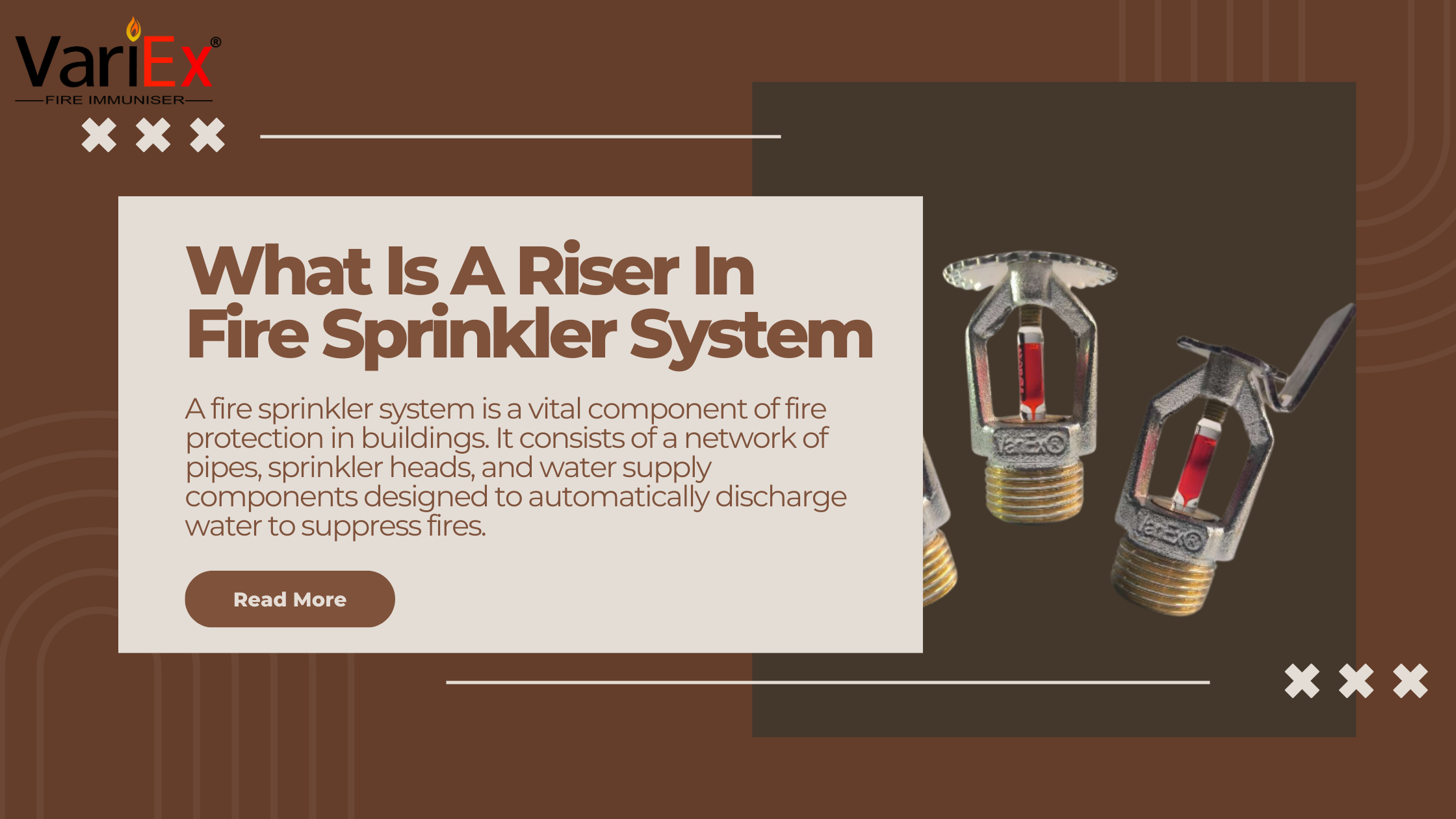
A fire sprinkler system is a vital component of fire protection in buildings. It consists of a network of pipes, sprinkler heads, and water supply components designed to automatically discharge water to suppress fires. A key element of this system is the riser, which serves as the vertical conduit for water distribution. This article will delve into the details of fire sprinkler risers, their types, components, installation, and maintenance.
What is a Riser in a Fire Sprinkler System?
A riser in a fire sprinkler system is a vertical pipe that carries water from the water supply source to the horizontal piping network that distributes water to the individual sprinkler heads. It acts as the backbone of the system, ensuring a reliable and efficient water supply to all areas of the building.
Types of Risers
There are several types of risers used in fire sprinkler systems, each with its own characteristics and applications:
- Dry Risers: These risers are typically installed in buildings where the sprinkler system is not required to be constantly pressurized. They are filled with air and only become pressurized when a fire alarm activates. Dry risers are commonly used in buildings with seasonal occupancy or where freezing temperatures are a concern.
- Wet Risers: Wet risers are always pressurized with water and are ready to activate immediately upon detection of a fire. They are suitable for buildings with year-round occupancy and where freezing is not a significant issue.
- Preaction Risers: These risers are similar to dry risers but require a pre-action device to activate the system. This device can be a smoke detector, heat detector, or other sensing device. Preaction risers are often used in sensitive areas where accidental water discharge is a concern, such as data centers or museums.
Components of a Riser
A typical fire sprinkler riser consists of the following components:
- Riser Pipe: The main vertical pipe that carries water from the water supply source to the horizontal piping network.
- Control Valves: Valves located at the base of the riser that regulate water flow.
- Check Valves: Valves that prevent water from flowing back into the water supply source.
- Pressure Reducing Valves: Valves used to reduce water pressure to the desired level within the sprinkler system.
- Gauges: Gauges that monitor water pressure within the riser.
- Drain Valves: Valves used to drain the riser for maintenance or repair.
Riser Installation and Placement
The installation of a riser must comply with applicable building codes and standards, such as NFPA 13: Standard for the Installation of Sprinkler Systems. Key considerations for riser installation include:
- Location: Risers should be located in areas that provide easy access for inspection and maintenance. They should also be placed in a manner that minimizes the potential for obstructions or damage.
- Size: The size of the riser pipe must be adequate to deliver the required water flow to the sprinkler system.
- Support: Risers must be properly supported to prevent sagging or movement.
- Connections: All connections to the riser must be secure and leak-free.
Riser Inspection and Maintenance
Regular inspection and maintenance of fire sprinkler risers are essential to ensure their proper functioning. This includes:
- Visual inspections: Checking for signs of corrosion, damage, or leaks.
- Pressure tests: Testing the riser for proper water pressure.
- Valve inspections: Ensuring that control valves, check valves, and drain valves are operating correctly.
- Gauges: Checking the accuracy of pressure gauges.
- Cleaning: Cleaning the riser and its components to remove debris and sediment.
NFPA Requirements for Risers
NFPA 13 provides detailed requirements for the design, installation, and maintenance of fire sprinkler risers. Key requirements include:
- Riser types: NFPA 13 specifies the appropriate riser type based on building occupancy and other factors.
- Riser size: The standard provides guidelines for determining the required size of the riser pipe.
- Water supply: NFPA 13 mandates that risers have a reliable water supply, including requirements for water pressure and flow rate.
- Testing and inspection: The standard specifies the frequency and procedures for inspecting and testing risers.
- Maintenance: NFPA 13 provides guidelines for the maintenance of risers, including cleaning, valve testing, and pressure checks.
Riser Materials and Construction
- Steel: The most common material for fire sprinkler risers due to its strength, durability, and corrosion resistance.
- Copper: Sometimes used in certain applications, especially in areas with high humidity or where corrosion is a concern.
- Other materials: In rare cases, other materials such as plastic or cast iron may be used, but they are less common due to potential limitations.
Riser Fittings and Connections
- Grooved couplings: A common type of connection used for risers, offering quick and easy installation.
- Threaded connections: Traditionally used but less common today due to the potential for leaks.
- Welding: Used in certain applications, such as for large-diameter risers or in areas with high seismic activity.
Riser Support and Anchoring
- Clamps: Used to secure risers to walls or ceilings.
- Brackets: Provide additional support for risers, especially in areas with high loads or seismic activity.
- Anchors: Used to secure risers to concrete or masonry structures.
Riser Water Supply
- Direct connection: Risers can be directly connected to the municipal water supply or a private water source.
- Fire pumps: In areas with low water pressure or inadequate water supply, fire pumps can be used to boost water pressure and ensure sufficient flow to the sprinkler system.
- Water tanks: Water tanks can be used to store water for use in the sprinkler system, especially in areas with limited water supply or where water pressure fluctuations are a concern.
Special Considerations for Risers
- Dry risers: Dry risers require regular testing and maintenance to ensure their proper functioning. This includes testing the air pressure, checking for leaks, and ensuring that the control valves operate correctly.
- Preaction risers: Preaction risers require a pre-action device to activate the system. This device should be regularly inspected and tested to ensure its reliability.
- Deluge systems: Deluge systems use risers to distribute water to a large number of sprinkler heads. They require special considerations for water supply, pressure, and flow rates.
Riser Testing and Maintenance
- Hydrostatic testing: Testing the riser for strength and integrity by filling it with water and applying pressure.
- Flow testing: Measuring the water flow rate from the riser to ensure it meets the required specifications.
- Valve testing: Testing the operation of control valves, check valves, and drain valves.
- Gauge calibration: Ensuring that pressure gauges are accurate and calibrated.
- Cleaning: Cleaning the riser and its components to remove debris and sediment.
Conclusion
Fire sprinkler risers are a critical component of fire protection systems. By understanding the different types of risers, their components, installation requirements, and maintenance needs, building owners and managers can ensure the proper functioning of their sprinkler systems and protect their property and occupants from fire hazards.
By understanding these additional aspects of fire sprinkler risers, building owners and managers can ensure that their systems are designed, installed, and maintained in accordance with best practices, providing effective fire protection for their properties.


Frequently Asked Questions
A wet riser is always pressurized with water and is ready to activate immediately upon detection of a fire. A dry riser is not pressurized and only becomes activated when a fire alarm triggers the system. Dry risers are often used in buildings with seasonal occupancy or where freezing temperatures are a concern.
The frequency of inspections for fire sprinkler risers depends on local building codes and regulations. However, a general guideline is to inspect risers annually. This includes visual inspections, pressure tests, valve testing, and cleaning.
Some signs of a problem with a fire sprinkler riser include:
- Leaky connections or valves
- Low water pressure
- Malfunctioning control valves
- Corrosion or damage to the riser pipe
- Obstructions in the riser
No, fire sprinkler risers should only be used for their intended purpose of providing water to the sprinkler system. Using them for other purposes can compromise their effectiveness and safety.
A pre-action device is a sensing device that triggers the activation of a preaction riser. It can be a smoke detector, heat detector, or other sensing device. This allows the system to be activated only when a fire is actually present, reducing the risk of accidental water discharge.
Buy Fire Extinguishers Online ----------------------
Check Our Complete Fire Extinguishers Price List.

Final Say
At VariEx.in and VariexOnline.com, we specialize in supplying and installing top-quality fire fighting systems and equipment. From fire extinguishers to advanced suppression systems, we offer comprehensive solutions tailored to your needs. Our experienced team ensures precise installation and maintenance for optimal safety.
Trust VariEx for reliable fire protection. Contact us online or call 7829629111 to learn more.
We specialize in manufacturing, supplying, and distributing a comprehensive range of fire fighting equipment, including state-of-the-art fire extinguishers. Read our most searched blogs and find interesting information on topics such as how to use a fire extinguisher, how to calculate fire fighting water tank capacity, fire extinguisher refilling, obtaining a Fire NOC, understanding fire fighting systems, types of fire protection systems, the fire hydrant system, and the fire sprinkler system. These resources provide essential knowledge for ensuring safety and compliance with fire safety regulations. Additionally, you can explore guides on the maintenance of fire protection equipment, the latest advancements in fire safety technology, and best practices for fire risk assessment and management.
Our expertise extends to fire alarm systems, fire hydrant systems, and fire suppression systems, including fire sprinklers. Each product meets rigorous international standards for reliability and performance, ensuring effective fire safety products tailored to diverse applications and industries. Additionally, we are providing Fire Extinguisher Refilling and AMC services to ensure ongoing maintenance and operational readiness of fire safety equipment.
"WHAT YOU CAN READ NEXT"
 Read more +24 November 2023 in Fire Extinguisher
What types of fire extinguishers are available for different fire classes?
 Read more +02 May 2026 in Fire Extinguisher
Class B Fire Extinguisher Uses, Types, Price & Buying Guide
 Read more +30 April 2026 in ABC Fire Extinguisher, AMC Services, CO2 Fire Extinguisher, Fire Extinguisher, Fire Fighting System, FIre Hydrant, Fire Safety Equipment, Fire Safety Equipment