
- HOME
- CORPORATE
- PORTFOLIO
- PRODUCTS
- SERVICES
- CLIENTS
- CONTACT US
- MORE

Fire Immuniser
+91-7829629111
Email: info@variex.in
Varistor Technologies Pvt. Ltd.
Block-1, First Floor, Ardente Office One, Hoodi Circle, ITPL Main Road, Bengaluru, Karnataka 560048, IN
What Happens If You Don’t Refill Your Fire Suppression System?
What Happens If You Don’t Refill Your Fire Suppression System?
A fire suppression system is a crucial component of fire safety, designed to protect lives and property from devastating fires. However, many business owners and property managers overlook the importance of regularly refilling their fire suppression system after it has been discharged or depleted.
Neglecting refilling can lead to serious consequences, including increased fire risks, legal penalties, insurance issues, and financial losses. In this article, we will explore what happens when a fire suppression system is not refilled and why timely maintenance is essential.
What Is a Fire Suppression System and Why Does It Need Refilling?
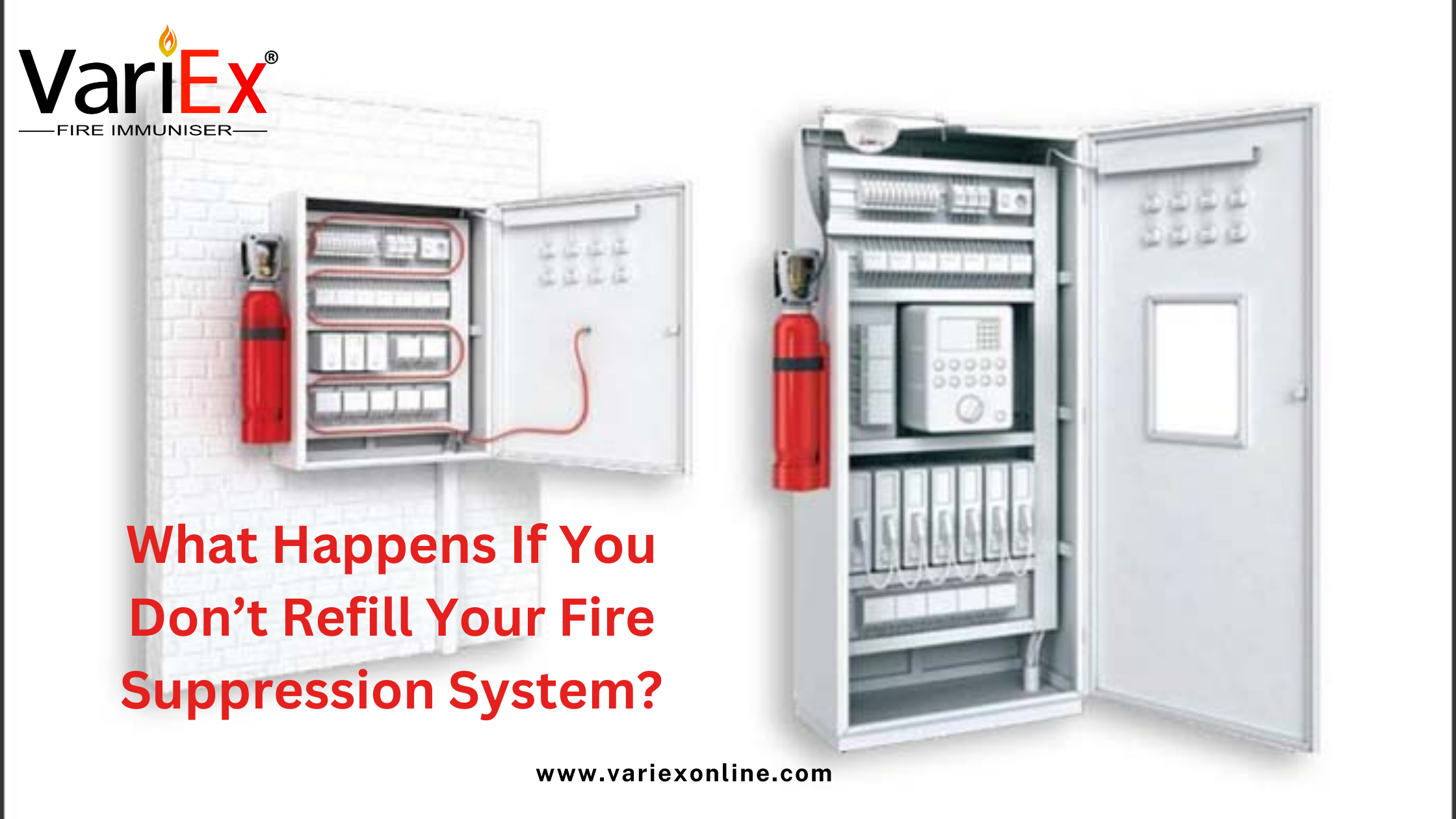
A fire suppression system is an advanced fire protection setup that controls and extinguishes fires without human intervention. These systems use gas, water, foam, or dry chemicals to suppress flames before they spread.
Why Refilling Is Necessary:
-
After activation, the system loses its fire-suppressing agent (gas, liquid, or powder).
-
Without refilling, the system remains empty and ineffective in case of another fire.
-
It ensures compliance with fire safety regulations (NFPA, OSHA, and local codes).
Consequences of Not Refilling Your Fire Suppression System
If you fail to refill your fire suppression system, several negative outcomes can occur, ranging from safety hazards to legal and financial consequences.
Key Consequences of Neglecting Fire Suppression System Refilling
| Consequence | Description | Impact |
|---|---|---|
| Increased Fire Risk | An empty suppression system cannot control or extinguish a fire. | Property loss, injuries, fatalities |
| Legal Non-Compliance | Regulatory bodies require systems to be fully operational. | Heavy fines, business closure |
| Higher Insurance Costs or Denial of Claims | Insurers may reject claims if fire safety systems are not maintained. | Financial burden, legal disputes |
| Damage to Equipment & Property | Fires can spread quickly without suppression, damaging valuable assets. | Expensive repairs and replacements |
| Business Disruptions | A major fire can shut down operations for weeks or months. | Loss of revenue, reputational damage |
Increased Fire Risks Due to an Unfilled Suppression System
Without a refilled fire suppression system, fire incidents become uncontrollable, leading to widespread damage and potential fatalities.
Fire Risks Include:
✔️ Rapid Fire Spread: Fire can spread within minutes without an immediate suppression system.
✔️ Total Property Loss: Lack of an operational system increases the chances of total destruction.
✔️ Risk to Human Life: Employees and occupants are left without fire protection.
💡 Fact: According to the NFPA, businesses that experience a major fire have a 60% chance of never reopening due to extreme losses.
Legal and Regulatory Penalties
Fire safety regulations require businesses and properties to maintain fully functional fire suppression systems at all times.
Key Fire Safety Standards:
✅ NFPA (National Fire Protection Association): Mandates regular refilling and inspections.
✅ OSHA (Occupational Safety and Health Administration): Requires businesses to maintain fire suppression systems to ensure workplace safety.
✅ Local Fire Codes: Municipal laws enforce fines and penalties for non-compliance.
🔴 Consequence of Non-Compliance:
-
Fines ranging from 4,27,326 to 42,73,314+ depending on severity.
-
Business license suspension or forced shutdown.
Insurance Issues: Claim Rejections and Increased Premiums
Failing to refill your fire suppression system can result in insurance claim denial if a fire occurs.
Why Insurance May Deny Your Claim:
❌ Negligence: Not maintaining a fire suppression system is considered a violation of safety policies.
❌ Policy Terms Breach: Most insurers require documented proof of regular refilling.
❌ Lack of Compliance: If a business fails a fire safety inspection, coverage may be voided.
💡 Tip: To maintain coverage, keep all maintenance records and refill your system on schedule.
Financial Consequences of an Unfilled Suppression System
The financial impact of not refilling a fire suppression system can be devastating.
Potential Costs of Neglect:
💰 Fire Damage Repairs: 85,46,215+ for commercial properties.
💰 Business Interruption Losses: Thousands in lost revenue per day.
💰 Legal Penalties & Fines: Up to 42,73,107 for fire code violations.
💰 Increased Insurance Premiums: 20%-50% higher rates due to high risk.
👉 Investing in timely refilling is a fraction of the cost compared to dealing with fire damage and legal troubles.
Business Disruptions and Reputation Damage
Without a working fire suppression system, a fire could shut down business operations indefinitely.
Effects of Business Disruptions:
📉 Loss of Customers: Clients lose trust in an unsafe business.
📉 Legal Trouble: Facing lawsuits from affected employees or tenants.
📉 Negative Publicity: Media coverage can tarnish the company’s reputation.
How Often Should You Refill Your Fire Suppression System?
The frequency of refilling depends on the type of suppression system and usage history.
Recommended Refilling Intervals:
✔️ CO₂ & Clean Agent Systems: Every 5 years or after activation.
✔️ Water & Foam Systems: Every 1-3 years (regular testing).
✔️ Dry Chemical Systems: Every 6 years (per NFPA 10 standards).
✔️ Kitchen Fire Suppression: Every 6 months (due to grease buildup).
📌 Always check manufacturer guidelines and conduct annual inspections.
Conclusion:
Neglecting to refill your fire suppression system can lead to property loss, financial disaster, legal trouble, and even fatalities. Staying proactive with refilling and maintenance ensures:
✔️ Fire protection readiness at all times.
✔️ Legal and insurance compliance to avoid fines and claim rejections.
✔️ Peace of mind knowing your business and people are safe.
💡 Take Action Now: Schedule a professional inspection and refilling service before it’s too late!



Frequently Asked Questions
If a system is not refilled after activation, it loses its ability to suppress fires, making the building vulnerable to fire damage and safety risks.
Check inspection tags, low-pressure alarms, or schedule an annual inspection with a certified fire safety professional.
No, refilling requires certified technicians who follow NFPA and manufacturer standards for proper recharging.
Costs vary by system type but typically range between 25,644 and 4,27,388, depending on the agent used.
Immediately contact a licensed fire safety professional for inspection, refilling, and re-certification.
Buy Fire Extinguishers Online ----------------------
Check Our Complete Fire Extinguishers Price List.

Final Say
At VariEx.in and VariexOnline.com, we specialize in supplying and installing top-quality fire fighting systems and equipment. From fire extinguishers to advanced suppression systems, we offer comprehensive solutions tailored to your needs. Our experienced team ensures precise installation and maintenance for optimal safety.
Trust VariEx for reliable fire protection. Contact us online or call 7829629111 to learn more.
We specialize in manufacturing, supplying, and distributing a comprehensive range of fire fighting equipment, including state-of-the-art fire extinguishers. Read our most searched blogs and find interesting information on topics such as how to use a fire extinguisher, how to calculate fire fighting water tank capacity, fire extinguisher refilling, obtaining a Fire NOC, understanding fire fighting systems, types of fire protection systems, the fire hydrant system, and the fire sprinkler system. These resources provide essential knowledge for ensuring safety and compliance with fire safety regulations. Additionally, you can explore guides on the maintenance of fire protection equipment, the latest advancements in fire safety technology, and best practices for fire risk assessment and management.
Our expertise extends to fire alarm systems, fire hydrant systems, and fire suppression systems, including fire sprinklers. Each product meets rigorous international standards for reliability and performance, ensuring effective fire safety products tailored to diverse applications and industries. Additionally, we are providing Fire Extinguisher Refilling and AMC services to ensure ongoing maintenance and operational readiness of fire safety equipment.
"WHAT YOU CAN READ NEXT"
 Read more +24 November 2023 in Fire Extinguisher
What types of fire extinguishers are available for different fire classes?
 Read more +02 May 2026 in Fire Extinguisher
Class B Fire Extinguisher Uses, Types, Price & Buying Guide
 Read more +30 April 2026 in ABC Fire Extinguisher, AMC Services, CO2 Fire Extinguisher, Fire Extinguisher, Fire Fighting System, FIre Hydrant, Fire Safety Equipment, Fire Safety Equipment