
- HOME
- CORPORATE
- PORTFOLIO
- PRODUCTS
- SERVICES
- CLIENTS
- CONTACT US
- MORE

Fire Immuniser
+91-7829629111
Email: info@variex.in
Varistor Technologies Pvt. Ltd.
Block-1, First Floor, Ardente Office One, Hoodi Circle, ITPL Main Road, Bengaluru, Karnataka 560048, IN
Refill A Fire Extinguisher
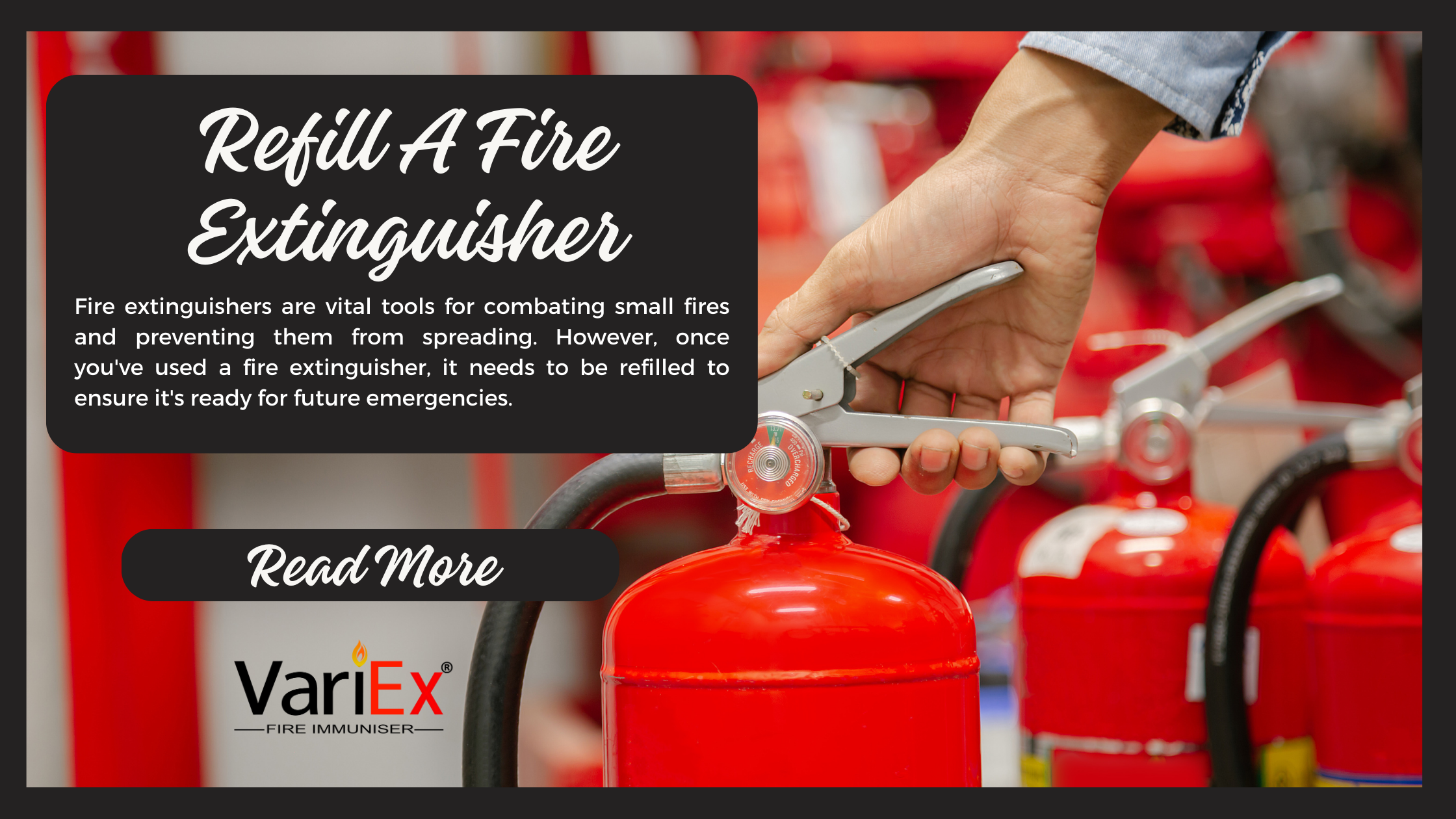
Fire extinguishers are vital tools for combating small fires and preventing them from spreading. However, once you've used a fire extinguisher, it needs to be refilled to ensure it's ready for future emergencies. Refilling a fire extinguisher is a straightforward process but requires careful attention to safety procedures. This guide will walk you through the steps to properly refill a fire extinguisher.
Step 1: Assess the Extinguisher
Before refilling, assess the type of fire extinguisher you have. Fire extinguishers come in different classes (A, B, C, D, or K) and use various extinguishing agents such as water, foam, dry chemical, CO2, or wet chemical. Make sure you understand the type of extinguishing agent your fire extinguisher contains.
Step 2: Check the Pressure Gauge
Inspect the pressure gauge on the extinguisher to ensure it's not showing any signs of damage or leakage. If the pressure gauge indicates low pressure, it's likely that the extinguisher needs a refill.
Step 3: Choose a Certified Refilling Service
Refilling a fire extinguisher requires specialized equipment and expertise. It's essential to choose a certified refilling service or technician to ensure the extinguisher is refilled correctly and meets safety standards. Look for reputable fire protection companies or professionals with experience in fire extinguisher maintenance.
Step 4: Empty the Extinguisher
If there's any remaining extinguishing agent in the fire extinguisher, it needs to be emptied before refilling. Discharge the extinguisher in a safe and controlled manner, following the manufacturer's instructions. Ensure there are no residual chemicals left inside the extinguisher.
Step 5: Refill the Extinguisher
The refilling process varies depending on the type of extinguishing agent used. For dry chemical extinguishers, refill with the appropriate dry chemical agent using specialized equipment. For CO2 extinguishers, refill with liquid CO2 under high pressure. Follow the technician's guidance carefully to ensure proper refilling.
Step 6: Recharge and Seal
Once the extinguisher is refilled, it needs to be recharged to the correct pressure level as indicated on the pressure gauge. The technician will use a pressure gauge to monitor and adjust the pressure accordingly. After recharging, the extinguisher is sealed to prevent leakage.
Step 7: Inspection and Testing
Before returning the extinguisher to service, conduct a visual inspection to ensure there are no signs of damage or leakage. Test the functionality of the extinguisher by pressing the test button or lever to verify that it's operational.
Step 8: Reinstall and Maintain
Once the refilling process is complete, reinstall the fire extinguisher in its designated location, ensuring easy access in case of emergency. Regularly inspect and maintain the extinguisher according to manufacturer recommendations to keep it in optimal condition.
Conclusion
Refilling a fire extinguisher is a critical maintenance task that ensures its readiness to tackle fires effectively. By following the steps outlined in this guide and entrusting the process to certified professionals, you can ensure that your fire extinguisher remains a reliable tool for fire safety in your home or workplace.


Frequently Asked Questions
Fire extinguishers are essential safety devices, but they lose pressure over time or after use. Refilling ensures they're fully functional in case of emergencies.
It's recommended to have fire extinguishers inspected annually, and refilled or replaced if necessary. Additionally, they should be refilled after any use, regardless of the amount discharged.
It's generally not advisable for individuals to refill fire extinguishers themselves due to the technical nature of the process and safety concerns. It's best to leave it to trained professionals.
Contact a licensed fire protection company or a fire equipment distributor. They have the expertise and equipment to properly refill and service fire extinguishers.
The cost varies depending on the type and size of the extinguisher, its condition, and your location. It's best to contact service providers for accurate pricing.
Final Say
At VariEx.in and VariexOnline.com, we specialize in supplying and installing top-quality fire fighting systems and equipment. From fire extinguishers to advanced suppression systems, we offer comprehensive solutions tailored to your needs. Our experienced team ensures precise installation and maintenance for optimal safety.
Trust VariEx for reliable fire protection. Contact us online or call 7829629111 to learn more.
"WHAT YOU CAN READ NEXT"
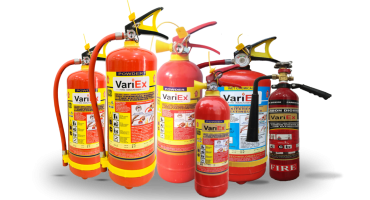 Read more +24 November 2023 in Fire Extinguisher
What types of fire extinguishers are available for different fire classes?
 Read more +02 May 2026 in Fire Extinguisher
Class B Fire Extinguisher Uses, Types, Price & Buying Guide
 Read more +30 April 2026 in ABC Fire Extinguisher, AMC Services, CO2 Fire Extinguisher, Fire Extinguisher, Fire Fighting System, FIre Hydrant, Fire Safety Equipment, Fire Safety Equipment