

- HOME
- CORPORATE
- PORTFOLIO
- PRODUCTS
- SERVICES
- CLIENTS
- CONTACT US
- MORE

Fire Immuniser
+91-7829629111
Email: info@variex.in
Varistor Technologies Pvt. Ltd.
Block-1, First Floor, Ardente Office One, Hoodi Circle, ITPL Main Road, Bengaluru, Karnataka 560048, IN
Novac System Refilling in Commercial Buildings
Novac System Refilling in Commercial Buildings
Novac fire suppression systems are widely used in commercial buildings to protect assets, data centers, and critical infrastructure from fire hazards. These systems require periodic refilling to maintain their effectiveness. Failure to refill the Novac system properly can result in system failure, fire risk, and regulatory non-compliance.
This guide will explore why Novac system refilling is essential, the step-by-step refilling process, safety measures, cost factors, and compliance requirements in commercial buildings.
Understanding Novac System Refilling
What is a Novac System?
A Novac system is a clean agent fire suppression system that uses Novec™ 1230 or a similar fire-extinguishing agent. It is designed to suppress fires quickly without damaging sensitive equipment, making it ideal for:
- Data centers
- Server rooms
- Healthcare facilities
- Corporate offices
- Retail stores
Why Does a Novac System Need Refilling?
Novac systems require refilling when:
- The fire suppression agent has been discharged after activation.
- The system has leaks leading to a drop in pressure.
- Routine maintenance inspections identify a need for refilling.
If the system is not refilled on time, it may not function properly in case of a fire, putting people and assets at risk.
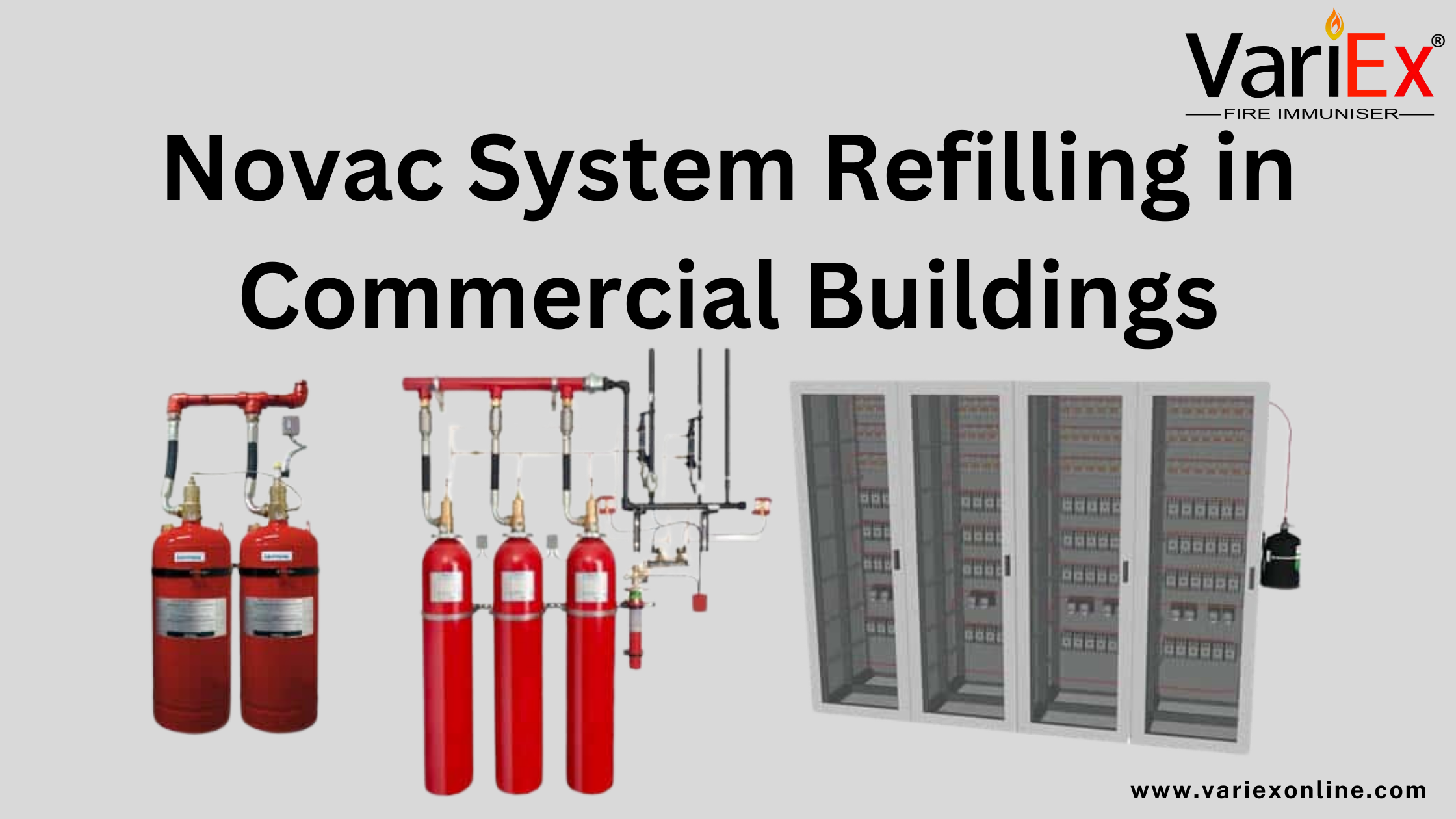
The Novac System Refilling Process in Commercial Buildings
Step 1: Pre-Refilling Inspection
Before refilling, a professional technician will:
✅ Check for leaks or damage in pipes and cylinders.
✅ Measure the remaining agent level and pressure.
✅ Inspect control panels and fire detection systems.
Step 2: Depressurization of the System
The existing pressure in the Novac system is safely released to prepare for refilling. This step is crucial to prevent over-pressurization accidents.
Step 3: Refilling the Novac Agent
A certified refilling service will:
✅ Use the correct concentration of Novac agent based on manufacturer specifications.
✅ Maintain appropriate pressure levels.
✅ Ensure no contamination enters the system.
Step 4: System Re-Pressurization
After refilling, the system is re-pressurized to its operating pressure. The technician will:
✅ Use calibrated pressure gauges.
✅ Monitor for any abnormal fluctuations.
✅ Verify that the cylinders and piping are secure.
Step 5: Testing & Final Verification
Before putting the system back into operation:
✅ A leak test is conducted.
✅ The system undergoes a functional check to ensure readiness.
✅ Compliance with local fire safety regulations is confirmed.
Safety Considerations During Refilling
1. Use Proper Personal Protective Equipment (PPE)
- Gloves to prevent skin contact with gas.
- Eye protection to avoid exposure to high-pressure discharge.
- Respirators if working in confined areas.
2. Ensure Proper Ventilation
Novac agents are non-toxic but can displace oxygen in confined spaces. Adequate ventilation prevents asphyxiation risks.
3. Monitor Pressure Levels
Over-pressurization can damage system components, while under-pressurization can cause malfunction during a fire. Certified pressure gauges must be used at all times.
4. Check for Leaks Before and After Refilling
Leaks can lead to:
❌ Loss of Novac agent, reducing system effectiveness.
❌ Potential fire hazards due to system failure.
❌ Regulatory non-compliance and penalties.
Cost Factors for Novac System Refilling in Commercial Buildings
| Cost Factor | Details |
|---|---|
| Amount of Novac Agent Needed | Depends on system size and previous discharge levels. |
| Labor Costs | Skilled technicians are required for safe refilling. |
| System Inspection Fees | Pre-refilling and post-refilling inspections ensure system readiness. |
| Equipment & Safety Measures | Leak detectors, pressure gauges, and PPE add to the cost. |
| Regulatory Compliance Fees | Meeting local fire safety codes may require extra certifications. |
💡 Tip: Regular maintenance and early leak detection can help reduce refilling costs by preventing excessive agent loss.
Regulatory Compliance for Novac System Refilling
1. Fire Safety Regulations
Novac systems must comply with:
✅ NFPA 2001 (Standard for Clean Agent Fire Suppression Systems).
✅ Local fire department requirements.
✅ Building codes for commercial spaces.
2. Environmental Considerations
- Novac gas is environmentally friendly but must still be handled carefully.
- Expired or contaminated Novac gas should be disposed of in accordance with environmental laws.
3. Certification Requirements
Only licensed professionals should perform refilling to ensure compliance with industry standards.
Benefits of Regular Novac System Refilling
✔ Ensures continuous fire protection for critical assets.
✔ Prevents costly fire damage to data centers and sensitive equipment.
✔ Complies with insurance and legal requirements for commercial buildings.
✔ Reduces risk of system failure in an emergency.
Ignoring refilling schedules can lead to legal liabilities, increased fire risks, and potential business losses.
Conclusion
Novac system refilling is an essential fire safety measure in commercial buildings. By following the correct refilling process, ensuring safety precautions, and staying compliant with regulations, building owners can protect their assets and occupants from fire hazards.
Regular maintenance and refilling will increase the longevity of the system, reduce risks, and provide reliable fire suppression when needed.
Frequently Asked Questions
A Novac system needs refilling after a discharge or if pressure levels drop below recommended levels. Regular annual inspections help detect when refilling is necessary.
No. Novac system refilling must be done by licensed professionals to ensure safety and compliance with regulations.
The refilling process typically takes 2-6 hours, depending on system size and complexity.
No, Novac gas is non-toxic but can displace oxygen, so proper ventilation is required.
Failure to refill can result in system failure, increasing fire risks, violating fire safety laws, and leading to business losses.
Buy Fire Extinguishers Online ----------------------
Check Our Complete Fire Extinguishers Price List.
Final Say
At VariEx.in and VariexOnline.com, we specialize in supplying and installing top-quality fire fighting systems and equipment. From fire extinguishers to advanced suppression systems, we offer comprehensive solutions tailored to your needs. Our experienced team ensures precise installation and maintenance for optimal safety.
Trust VariEx for reliable fire protection. Contact us online or call 7829629111 to learn more.
We specialize in manufacturing, supplying, and distributing a comprehensive range of fire fighting equipment, including state-of-the-art fire extinguishers. Read our most searched blogs and find interesting information on topics such as how to use a fire extinguisher, how to calculate fire fighting water tank capacity, fire extinguisher refilling, obtaining a Fire NOC, understanding fire fighting systems, types of fire protection systems, the fire hydrant system, and the fire sprinkler system. These resources provide essential knowledge for ensuring safety and compliance with fire safety regulations. Additionally, you can explore guides on the maintenance of fire protection equipment, the latest advancements in fire safety technology, and best practices for fire risk assessment and management.
Our expertise extends to fire alarm systems, fire hydrant systems, and fire suppression systems, including fire sprinklers. Each product meets rigorous international standards for reliability and performance, ensuring effective fire safety products tailored to diverse applications and industries. Additionally, we are providing Fire Extinguisher Refilling and AMC services to ensure ongoing maintenance and operational readiness of fire safety equipment.
"WHAT YOU CAN READ NEXT"
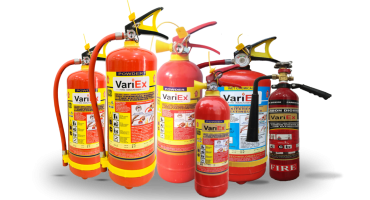 Read more +24 November 2023 in Fire Extinguisher
What types of fire extinguishers are available for different fire classes?
 Read more +02 May 2026 in Fire Extinguisher
Class B Fire Extinguisher Uses, Types, Price & Buying Guide
 Read more +30 April 2026 in ABC Fire Extinguisher, AMC Services, CO2 Fire Extinguisher, Fire Extinguisher, Fire Fighting System, FIre Hydrant, Fire Safety Equipment, Fire Safety Equipment
Hi.
This is from Fireking Solution, Siliguri, West Bengal, we have an existing Novac suppress system & also need to reinstall , for further discussion please call me given below number or send authorized person number for further communication.
My Mobile no. 9474313799 / 9735723799
Hi,
Thank you for reaching out. We’ve noted your request regarding the Novac suppression system reinstallation. Our team will contact you shortly. For immediate assistance, please feel free to reach us at 7829629111.