
- HOME
- CORPORATE
- PORTFOLIO
- PRODUCTS
- SERVICES
- CLIENTS
- CONTACT US
- MORE

Fire Immuniser
+91-7829629111
Email: info@variex.in
Varistor Technologies Pvt. Ltd.
Block-1, First Floor, Ardente Office One, Hoodi Circle, ITPL Main Road, Bengaluru, Karnataka 560048, IN
How To Conduct An Emergency Mock Drill
How To Conduct An Emergency Mock Drill
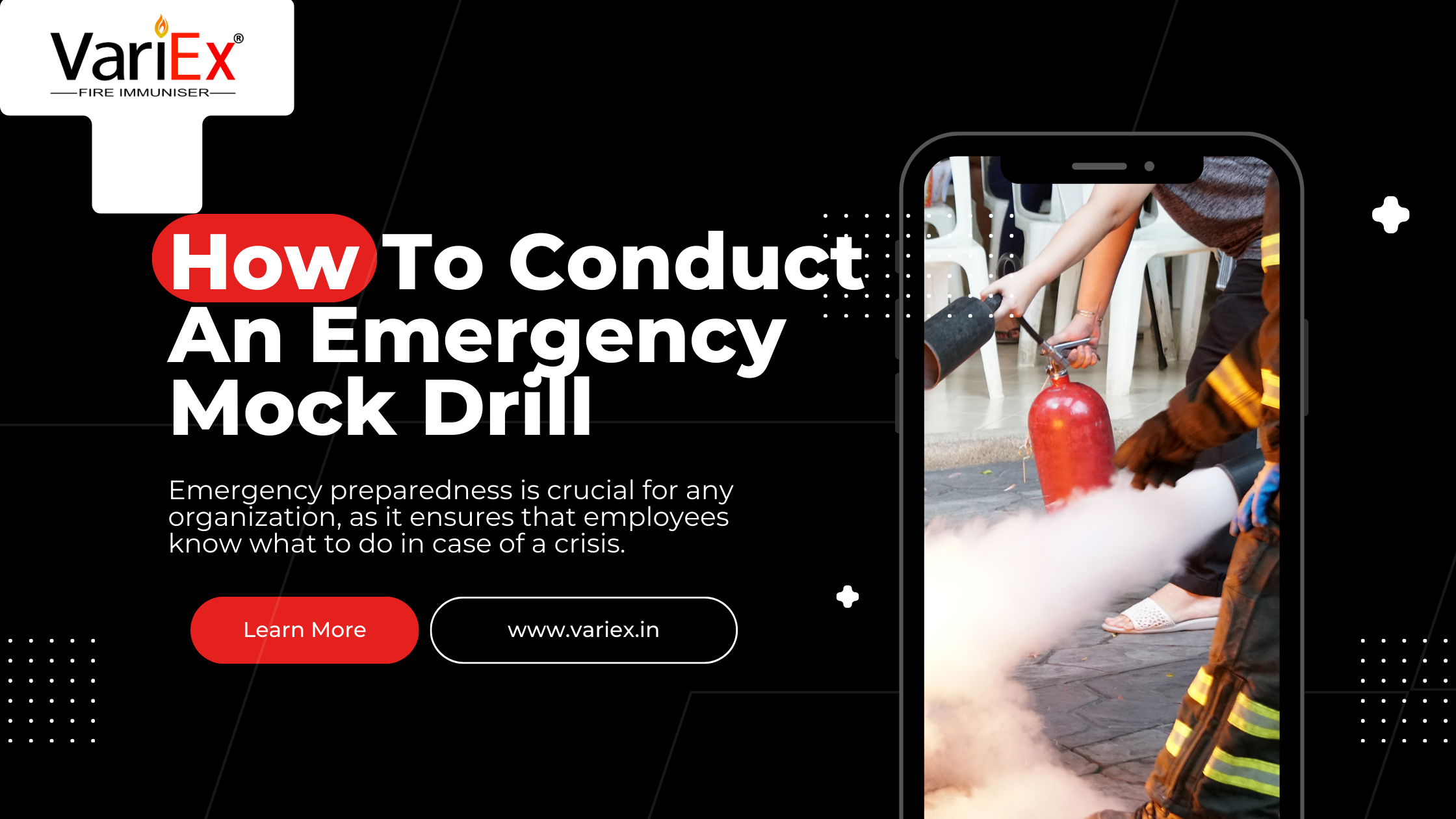
Emergency preparedness is crucial for any organisation, as it ensures that employees know what to do in case of a crisis. One of the most effective ways to prepare for emergencies is by conducting regular mock drills. These drills simulate emergency situations, helping to evaluate the effectiveness of the emergency response plan and training staff to respond appropriately.
In this guide, we will walk you through the process of conducting an emergency mock drill from planning and execution to evaluation and improvement.
1. Importance of Emergency Mock Drills
Before diving into the steps, it's essential to understand why mock drills are necessary:
- Enhanced Safety: Regular drills ensure that employees know evacuation routes, assembly points, and emergency procedures.
- Compliance: Many regulatory bodies require periodic emergency drills to comply with safety standards.
- Preparedness: Drills test the readiness of both employees and the emergency response team.
- Response Time: Practicing drills helps reduce the time taken to respond to real emergencies, potentially saving lives and reducing damage.
2. Planning and Preparation
Proper planning is the cornerstone of a successful emergency mock drill. It involves setting objectives, creating a realistic scenario, and ensuring everyone understands their roles.
Set Clear Objectives
Determine the primary purpose of the drill. Are you testing the effectiveness of evacuation procedures, the response time of emergency personnel, or the overall coordination between different departments? Clear objectives will guide the entire process.
Conduct a Risk Assessment
Identify potential emergencies your organization might face. This could include:
- Fire: A common threat in many workplaces.
- Natural Disasters: Earthquakes, floods, or storms.
- Chemical Spills: Particularly relevant for industries handling hazardous materials.
- Medical Emergencies: Heart attacks, seizures, or other health-related incidents.
Understanding these risks will help in creating a realistic and relevant scenario.
Formulate a Detailed Plan
Create a comprehensive plan that includes:
- Type of Drill: Evacuation, lockdown, or shelter-in-place.
- Date and Time: Choose a time that minimizes disruption but ensures maximum participation.
- Roles and Responsibilities: Assign roles such as coordinators, observers, and first responders.
Develop a Scenario
Design a scenario that is as realistic as possible. For example, in a fire drill, simulate a situation where a fire has started in a specific area, and certain exits are blocked. This will force participants to think critically and adapt to the situation.
3. Training and Communication
Effective communication and training are critical to the success of a mock drill. Employees must know their roles and what to expect during the drill.
Educate the Staff
Conduct training sessions to educate employees about:
- Emergency Procedures: How to evacuate, where to assemble, and whom to report to.
- Roles: Specific duties of floor wardens, first aiders, and other designated roles.
- Emergency Equipment: Location and use of fire extinguishers, first aid kits, etc.
Pre-Drill Communication
While the exact timing and nature of the drill should remain confidential to some extent, inform employees that a drill will take place within a certain period. This reduces panic and ensures that everyone takes the drill seriously.
4. Executing the Drill
Execution is the most critical phase, where the entire plan is put into action.
Initiate the Drill
Start the drill using the designated method, such as activating the fire alarm or making an announcement. The drill should be as realistic as possible, using props or simulated scenarios if necessary.
Monitor the Response
Observers should be stationed at key points to monitor the response. They should note:
- Response Time: How long it takes for employees to start evacuating or following procedures.
- Behavior: Whether employees remain calm, follow instructions, and use designated exits.
- Coordination: How well the emergency response team works together and communicates.
Simulate Emergency Scenarios
If your drill involves a complex scenario, introduce elements like blocked exits or injured individuals to test the adaptability and problem-solving abilities of the participants.
5. Post-Drill Evaluation
After the drill, a thorough evaluation helps identify what went well and what needs improvement.
Conduct a Debriefing Session
Gather all participants, including observers and the emergency response team, for a debriefing session. Discuss:
- Observations: What went well and what didn’t.
- Feedback: Gather input from employees about their experiences and any confusion they faced.
- Challenges: Highlight any issues faced during the drill, such as communication breakdowns or panic.
Analyse the Results
Compare the outcomes of the drill with the objectives set during the planning phase. This analysis should include:
- Response Time: Did employees evacuate or take action within the expected timeframe?
- Compliance: Did everyone follow the designated procedures?
- Effectiveness: Was the emergency response team able to manage the scenario effectively?
6. Continuous Improvement
The purpose of a mock drill is not just to test readiness but to identify areas of improvement. Based on the evaluation, take the following steps:
Develop an Action Plan
Create an action plan to address the weaknesses identified during the evaluation. This could include:
- Additional Training: For employees who were unsure of their roles or procedures.
- Equipment Updates: If any emergency equipment was found to be malfunctioning or inadequate.
- Procedure Modifications: If certain procedures were not effective, update them.
Document and Record
Maintain detailed records of the drill, including:
- Date and Time: When the drill was conducted.
- Participants: List of employees who took part in the drill.
- Scenarios and Observations: Detailed account of the scenario used and observations made.
- Evaluation and Action Plan: Results of the evaluation and steps for improvement.
These records are useful for compliance and future planning.
7. Best Practices for Effective Mock Drills
Here are some best practices to ensure your mock drills are effective and beneficial:
Regular Drills
Conduct drills regularly to ensure that employees remain familiar with procedures. The frequency may vary depending on the nature of the workplace but aim for at least twice a year.
Vary the Scenarios
Avoid using the same scenario for every drill. Change the type of emergency and the affected areas to keep participants alert and engaged.
Involve External Agencies
For more complex drills, involve local emergency services like fire departments, paramedics, or law enforcement. This will help in coordinating with them during real emergencies.
Simulate Real-Life Conditions
Introduce challenges like blocked exits, missing persons, or injured individuals to make the drill as realistic as possible. This will test the adaptability and critical thinking of the participants.
Use Technology
Leverage technology like mobile apps or digital platforms for communicating during the drill and tracking the response. This can also be useful for collecting real-time data and feedback.
Conclusion
Conducting emergency mock drills is a proactive step toward ensuring workplace safety and preparedness. While it may seem like a routine activity, the benefits of a well-planned and executed drill are immense. It prepares employees for real emergencies, ensures compliance with safety regulations, and highlights areas for improvement in your emergency response plan.
By following this comprehensive guide, you can ensure that your emergency mock drills are effective, realistic, and valuable learning experiences for everyone involved. Regular practice, continuous improvement, and a commitment to safety are key to creating a resilient and prepared workplace.


Frequently Asked Questions
The primary purpose of an emergency mock drill is to prepare employees and the organization for potential emergency situations. It tests the effectiveness of the emergency response plan, familiarizes employees with evacuation routes and procedures, and identifies areas for improvement in the safety protocols.
The frequency of mock drills depends on regulatory requirements and the specific needs of the organization. Generally, it is recommended to conduct at least two drills per year. High-risk industries or larger organizations may need to conduct them more frequently, such as quarterly or monthly.
A successful emergency mock drill includes thorough planning, realistic scenarios, effective communication, active participation, and detailed evaluation. Key elements include setting clear objectives, training participants, simulating real-life conditions, monitoring the response, and conducting a debriefing session for feedback and improvement.
Proper training and communication are crucial to ensure that employees take the drill seriously. Educate them about the importance of mock drills and what to expect. Conduct regular training sessions, brief them before the drill, and create a supportive environment that encourages calm and orderly participation.
The post-drill evaluation report should include the drill’s objectives, the scenario used, observations of the response, response times, and any issues encountered. It should also provide an analysis of the effectiveness of the drill, feedback from participants, identified gaps, and an action plan for improvement. Documentation of these findings helps in refining future emergency plans and procedures.
Buy Fire Extinguishers Online ----------------------
Check Our Complete Fire Extinguishers Price List.

Final Say
At VariEx.in and VariexOnline.com, we specialize in supplying and installing top-quality fire fighting systems and equipment. From fire extinguishers to advanced suppression systems, we offer comprehensive solutions tailored to your needs. Our experienced team ensures precise installation and maintenance for optimal safety.
Trust VariEx for reliable fire protection. Contact us online or call 7829629111 to learn more.
We specialize in manufacturing, supplying, and distributing a comprehensive range of fire fighting equipment, including state-of-the-art fire extinguishers. Read our most searched blogs and find interesting information on topics such as how to use a fire extinguisher, how to calculate fire fighting water tank capacity, fire extinguisher refilling, obtaining a Fire NOC, understanding fire fighting systems, types of fire protection systems, the fire hydrant system, and the fire sprinkler system. These resources provide essential knowledge for ensuring safety and compliance with fire safety regulations. Additionally, you can explore guides on the maintenance of fire protection equipment, the latest advancements in fire safety technology, and best practices for fire risk assessment and management.
Our expertise extends to fire alarm systems, fire hydrant systems, and fire suppression systems, including fire sprinklers. Each product meets rigorous international standards for reliability and performance, ensuring effective fire safety products tailored to diverse applications and industries. Additionally, we are providing Fire Extinguisher Refilling and AMC services to ensure ongoing maintenance and operational readiness of fire safety equipment.
"WHAT YOU CAN READ NEXT"
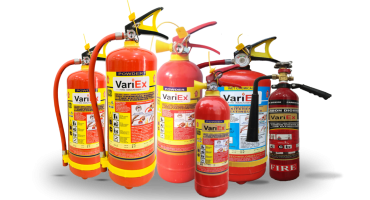 Read more +24 November 2023 in Fire Extinguisher
What types of fire extinguishers are available for different fire classes?
 Read more +02 May 2026 in Fire Extinguisher
Class B Fire Extinguisher Uses, Types, Price & Buying Guide
 Read more +30 April 2026 in ABC Fire Extinguisher, AMC Services, CO2 Fire Extinguisher, Fire Extinguisher, Fire Fighting System, FIre Hydrant, Fire Safety Equipment, Fire Safety Equipment