

Fire Immuniser
+91-7829629111
Email: info@variex.in
Varistor Technologies Pvt. Ltd.
Block-1, First Floor, Ardente Office One, Hoodi Circle, ITPL Main Road, Bengaluru, Karnataka 560048, IN
How DLP Refilling Improved Fire Safety at a Manufacturing Plant
How DLP Refilling Improved Fire Safety at a Manufacturing Plant
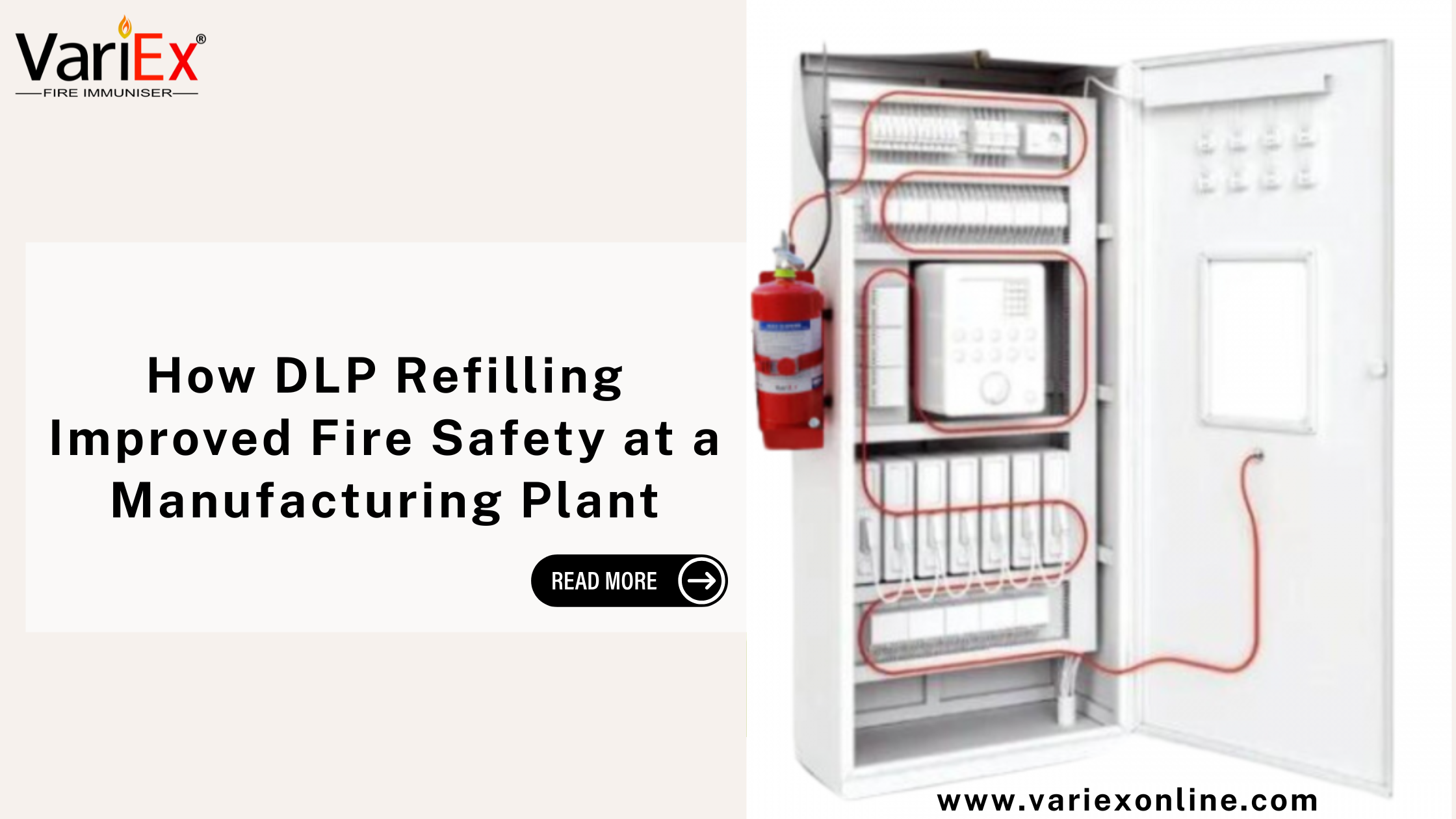
Fire safety is a critical concern for manufacturing plants, where equipment heat, electrical systems, and combustible materials increase fire risks. In such industrial settings, the maintenance of fire extinguishers and suppression systems cannot be overlooked. One powerful method that is transforming fire safety operations is Direct Low Pressure (DLP) refilling.
This blog highlights how the adoption of DLP refilling dramatically improved fire safety at a medium-sized manufacturing plant, reducing downtime, boosting safety compliance, and saving operational costs. If your facility is considering an upgrade in fire protection maintenance, this real-world example offers valuable insights.
Background: The Plant's Fire Safety Challenges
The manufacturing plant, located in the Midwest USA, specializes in automotive components production. The facility covers 150,000 square feet and operates 24/7. Prior to adopting DLP refilling, the plant faced several fire safety challenges:
-
Inefficient manual refilling of extinguishers that took up to 3 days, requiring system shutdowns.
-
Frequent over-pressurization incidents, causing wear and damage to expensive CO₂ and dry chemical extinguishers.
-
Non-compliance issues during NFPA 10 audits, due to inaccurate pressure readings and refill inconsistencies.
-
High maintenance costs from repeated valve replacements and agent wastage.
With nearly 200 extinguishers across multiple zones, these issues presented significant operational and safety risks.
What is Direct Low Pressure (DLP) Refilling?
Direct Low Pressure (DLP) refilling is a controlled fire extinguisher maintenance process, where agents such as ABC powder or CO₂ are refilled using low-pressure systems. Unlike traditional high-pressure refilling, DLP offers a safer, more precise, and eco-friendly approach to recharging extinguishers and suppression systems.
The DLP Refilling Implementation Process
To address its challenges, the plant partnered with a certified fire safety service provider specializing in DLP refilling. The implementation process included:
-
Initial Audit: Comprehensive assessment of fire safety systems and extinguisher placement.
-
Decommissioning Manual Refilling: Phasing out high-pressure, manual refilling procedures.
-
Deployment of DLP Equipment: Installing portable low-pressure refilling stations on-site.
-
Staff Training: Educating maintenance staff and safety managers on DLP processes and equipment handling.
-
Routine Scheduling: Creating a quarterly DLP refilling and inspection schedule to minimize downtime.
This systematic approach ensured seamless integration without disrupting daily plant operations.
Table: Pre-DLP vs. Post-DLP Refilling Results at the Plant
| Fire Safety Metric | Before DLP Refilling | After DLP Refilling |
|---|---|---|
| Refilling Downtime | 3 days per quarter | Less than 6 hours per quarter |
| Over-Pressurization Incidents | 5+ cases annually | Zero cases in 12 months |
| Compliance Audit Results | Non-compliant twice in 3 years | 100% compliant in annual audits |
| Agent Waste | 15% loss during refill processes | Less than 2% waste |
| Equipment Failure Rates | Frequent valve and gauge replacements | No component failures reported |
| Overall Maintenance Costs | High due to emergency repairs | Reduced by 35% annually |
| Fire Readiness Score (Internal Metric) | 65/100 | 98/100 |
Key Benefits Realized Through DLP Refilling
1. Enhanced Operational Efficiency
DLP refilling significantly reduced the downtime required for fire safety maintenance. Rather than taking several days, the process was completed during off-shift hours, ensuring continuous production.
2. Improved Equipment Longevity
Low-pressure refilling eliminated over-pressurization stress on extinguishers and valves. This extended the lifespan of both portable and fixed suppression systems, reducing equipment replacement cycles.
3. Full Regulatory Compliance
The plant successfully passed two consecutive NFPA 10 compliance audits post-DLP implementation. Digital documentation generated during each refill cycle ensured compliance transparency.
4. Cost Savings
Through reduced component failures, faster maintenance, and lower agent wastage, the plant achieved an estimated 35% reduction in fire safety maintenance costs in the first year.
5. Enhanced Workplace Safety
The reduced risk of accidental agent release, combined with safer refill operations, protected both maintenance personnel and production workers from unnecessary hazards.
Technologies Used in the Plant’s DLP Refilling Program
The success of the project hinged on the deployment of advanced fire safety tools:
-
Low-Pressure Fill Pumps: Ensured consistent agent transfer.
-
Digital Pressure Gauges: Monitored fill levels with high accuracy.
-
Vacuum Pumps: Removed air and moisture before refilling.
-
Anti-Static Hoses: Prevented ignition risks during powder transfers.
-
Portable Refilling Units: Enabled zone-based maintenance without relocating extinguishers.
Staff Training and Process Optimization
Beyond equipment, the project’s success was largely due to employee engagement and training. Technicians were taught how to:
-
Inspect cylinders before and after refilling.
-
Safely operate DLP systems without external support.
-
Document maintenance activities for audit readiness.
-
Identify early warning signs of extinguisher wear or leakage.
By creating a standardized maintenance playbook, the facility reduced human error in fire safety operations.
Sustainability Benefits
In addition to operational gains, the plant’s fire safety overhaul aligned with its corporate sustainability goals. DLP refilling reduced:
-
Waste generation, as agents were transferred with minimal spillage.
-
Energy consumption, due to the lower power requirements of DLP systems versus traditional compressors.
-
Environmental impact, by preventing the release of chemical suppression agents into the air.
These improvements contributed to the plant’s ISO 14001 environmental management certification renewal.
Lessons Learned from the Case Study
This manufacturing plant’s journey with DLP refilling offers several lessons:
-
Fire safety processes should evolve alongside manufacturing automation.
-
Scheduled, preventive maintenance costs less than emergency repairs.
-
Investing in the right tools enhances safety and business continuity.
-
Fire safety compliance is easier to achieve when using data-driven maintenance systems.
Facilities across industries can replicate this approach to improve their fire safety operations without sacrificing productivity.
Conclusion
DLP refilling played a pivotal role in enhancing the fire safety culture at this manufacturing plant. By replacing outdated, manual refilling processes with a modern, low-pressure system, the plant achieved:
-
Greater equipment reliability
-
Faster, safer maintenance
-
Lower environmental impact
-
Full regulatory compliance
-
Significant cost savings
If your business still relies on high-pressure or manual extinguisher refilling, now is the time to consider Direct Low Pressure refilling as a smarter, safer alternative. Partnering with a qualified fire safety service provider will streamline the transition and safeguard your facility for years to come.
Frequently Asked Questions
Yes, DLP refilling is quiet and safe enough to be done during off-shift hours without interrupting core manufacturing processes.
Most extinguishers can be refilled within 5–10 minutes using DLP methods, compared to 20–30 minutes with manual processes.
Yes, DLP refilling works effectively with both small portable extinguishers and larger fixed fire suppression systems.
ABC powder, clean agent, and CO₂ extinguishers are commonly refilled using DLP systems.
Yes, but these are minimal compared to the savings from reduced downtime and equipment replacements.
Buy Fire Extinguishers Online ----------------------
Check Our Complete Fire Extinguishers Price List.
Final Say
At VariEx.in and VariexOnline.com, we specialize in supplying and installing top-quality fire fighting systems and equipment. From fire extinguishers to advanced suppression systems, we offer comprehensive solutions tailored to your needs. Our experienced team ensures precise installation and maintenance for optimal safety.
Trust VariEx for reliable fire protection. Contact us online or call 7829629111 to learn more.
We specialize in manufacturing, supplying, and distributing a comprehensive range of fire fighting equipment, including state-of-the-art fire extinguishers. Read our most searched blogs and find interesting information on topics such as how to use a fire extinguisher, how to calculate fire fighting water tank capacity, fire extinguisher refilling, obtaining a Fire NOC, understanding fire fighting systems, types of fire protection systems, the fire hydrant system, and the fire sprinkler system. These resources provide essential knowledge for ensuring safety and compliance with fire safety regulations. Additionally, you can explore guides on the maintenance of fire protection equipment, the latest advancements in fire safety technology, and best practices for fire risk assessment and management.
Our expertise extends to fire alarm systems, fire hydrant systems, and fire suppression systems, including fire sprinklers. Each product meets rigorous international standards for reliability and performance, ensuring effective fire safety products tailored to diverse applications and industries. Additionally, we are providing Fire Extinguisher Refilling and AMC services to ensure ongoing maintenance and operational readiness of fire safety equipment.
"WHAT YOU CAN READ NEXT"
 Read more +24 November 2023 in Fire Extinguisher
What types of fire extinguishers are available for different fire classes?
 Read more +09 February 2026 in Fire Extinguisher
Fire Extinguisher Near Me: Find Trusted Dealers and Certified Services
 Read more +28 January 2026 in ABC Fire Extinguisher, CO2 Fire Extinguisher, Fire Extinguisher, Fire Fighting System, Fire Safety Equipment