
- HOME
- CORPORATE
- PORTFOLIO
- PRODUCTS
- SERVICES
- CLIENTS
- CONTACT US
- MORE

Fire Immuniser
+91-7829629111
Email: info@variex.in
Varistor Technologies Pvt. Ltd.
Block-1, First Floor, Ardente Office One, Hoodi Circle, ITPL Main Road, Bengaluru, Karnataka 560048, IN
Ensure Fire Safety, Contribute Towords Nation Building
Fire safety is a cornerstone of nation building, essential for protecting lives, property, and infrastructure. By prioritizing fire safety measures, individuals and communities contribute to the resilience and progress of their nation.
FIRE RISK IN THE SCHOOL
The fire risk in schools and colleges are comparatively less compared to commercial and industrial establishments.The following are the various places in the institutional establishment, where fire can occur.
RISK IN CLASS ROOMS
Here the fire risk is negligible, as only furniture's and blackboards are present, only ordinary fire is expected which may cause due to electrical short circuits or radiation of heat from the adjacent building.
FIRE SAFETY MEASURES IN LABORATORIES
Efficient and effective fire and smoke detection and alarm system shall be installed.
- Detailed fire emergency and evacuation plan in the lab personal in conversant with and can act upon when needed.
- In case of emergency the occupants should know the use of fire extinguishers and other fire fighting equipment and also emergency evacuation procedure
- Exit signs shall be visible in all conditions and exit ways should be free without any obstructions, leading directly to street, courtyard or any other open space.
- "No Smoking "Signs shall be displayed in prominent places and Rule shall be enforced strictly. Combustible materials shall be stored properly, cabins shall be clearly labeled as follows: NO SMOKING AND NO NAKED FLAMES".
- Flammable and other liquids items shall be stored in appropriate containers and displaying liquid names clearly.
- While heating chemicals, in course of experiments, care shall be taken to heat each chemical well below its auto-ignition temperature, since in oxygen-enriched atmosphere, auto-ignition temperature
is considerably lowered. Check before heating in such situations. - All electrical wirings installations, modifications, replacements and repairs shall be made and must be maintained as per National Electrical Code (IS:732 code of Practice for Electrical Wiring and earthed and all electrical Installations) all interior wiring systems shall be properly insulated
appliances should carry ISI mark. - Large gas cylinder should be moved in approved trolleys without any Man handle.
- Fire is one of the most prevalent threats to archives and libraries which store often irreplaceable items that are at risk from fire itself, but also from contamination by smoke and heat. Where fire can take place due to electrical short circuits, loose fittings, naked flames, in case of power failure while using candles or lanterns carelessly.
FIRE RISK IN SCHOOLS STORE AND RECORD ROOM.
These another important places where all types of fire can be expected. Air contained chemicals, liquids, solvents, gases, furniture and old records. Etc., are present in these premises.
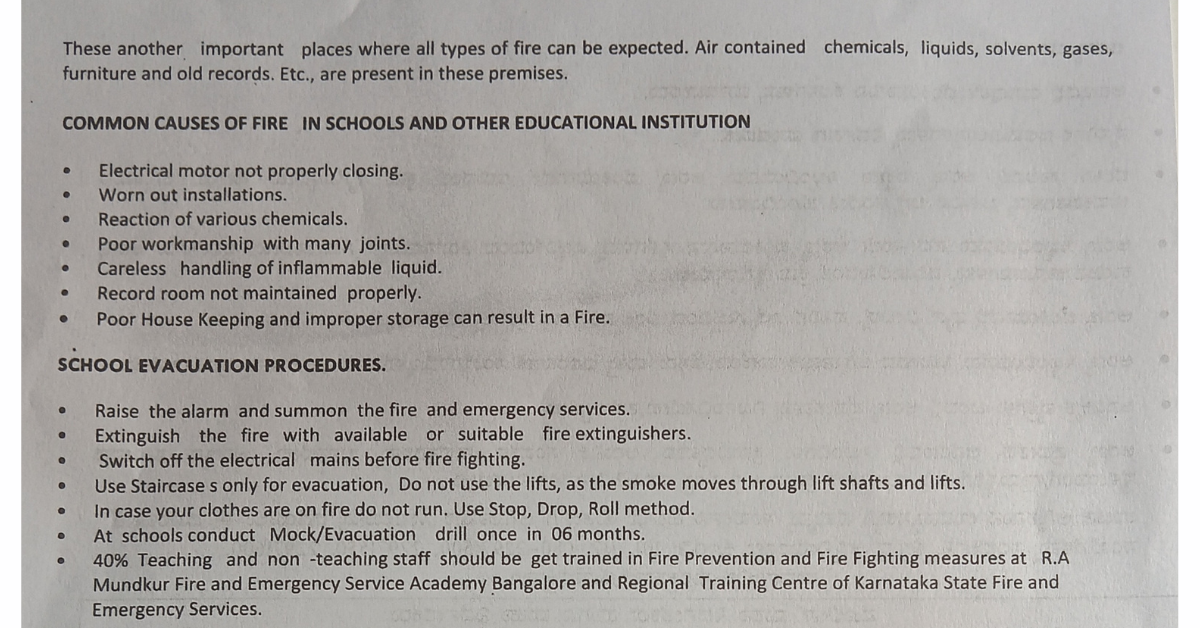
COMMON CAUSES OF FIRE IN SCHOOLS AND OTHER EDUCATIONAL INSTITUTION
1.Electrical motor not properly closing.
2. Worn out installations.
3. Reaction of various chemicals.
4. Poor workmanship with many joints.
5. Careless handling of inflammable liquid.
6. Record room not maintained properly.
7. Poor House Keeping and improper storage can result in a Fire.
SCHOOL EVACUATION PROCEDURES.
1. Raise the alarm and summon the fire and emergency services.
2. Extinguish the fire with available or suitable fire extinguishers.
3. Switch off the electrical mains before fire fighting.
4. Use Staircases only for evacuation, Do not use the lifts, as the smoke moves through lift shafts and lifts.
5. In case your clothes are on fire do not run. Use Stop, Drop, Roll method.
6. At schools conduct Mock/Evacuation drill once in 06 months.
7. 40% Teaching and non -teaching staff should be get trained in Fire Prevention and Fire Fighting measures at R.A Mundkur Fire and Emergency Service Academy Bangalore and Regional Training Centre of Karnataka State Fire and Emergency Services.
Ensuring fire safety is not only a moral imperative but also a fundamental aspect of nation building. By prioritizing fire prevention, investing in detection and suppression systems, fostering collaboration, and empowering communities, individuals and nations can mitigate the devastating impact of fires and contribute to building safer, more resilient societies for future generations.

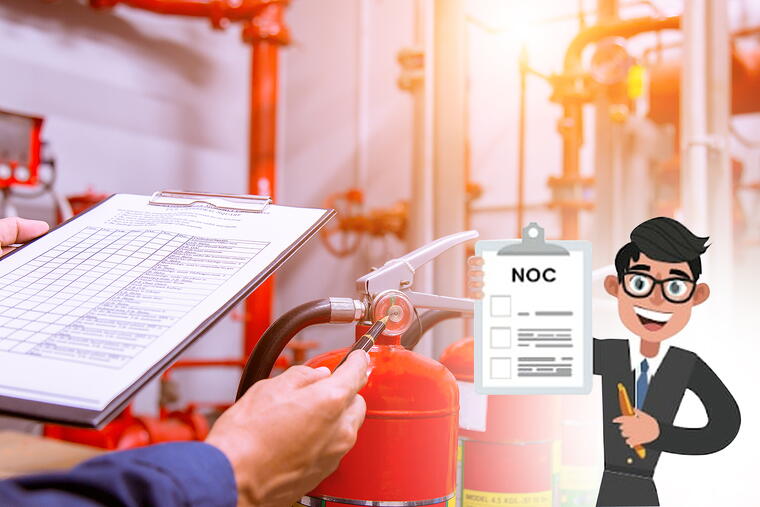
Fire NOC
Consultancy:
30-Minute Expert
Session
Frequently Asked Questions
Fire safety is essential for protecting lives, property, and infrastructure, contributing to the resilience and progress of a nation.
Common fire risks include electrical short circuits, worn-out installations, reactions of chemicals, poor workmanship, careless handling of inflammable liquids, and improper maintenance of record rooms.
Fire safety measures include installing efficient detection and alarm systems, creating detailed emergency and evacuation plans, ensuring proper storage of combustible materials, displaying "No Smoking" signs, and using ISI-marked appliances.
Raise the alarm, summon fire and emergency services, extinguish the fire with suitable extinguishers, switch off electrical mains, use staircases for evacuation (avoid lifts), and conduct regular evacuation drills.
Schools should train 40% of teaching and non-teaching staff in fire prevention and firefighting measures at recognized training centers like R.A Mundkur Fire and Emergency Service Academy in Bangalore.
Buy Fire Extinguishers Online ----------------------
Check Our Complete Fire Extinguishers Price List.
Final Say
At VariEx.in and VariexOnline.com, we specialize in supplying and installing top-quality fire fighting systems and equipment. From fire extinguishers to advanced suppression systems, we offer comprehensive solutions tailored to your needs. Our experienced team ensures precise installation and maintenance for optimal safety.
Trust VariEx for reliable fire protection. Contact us online or call 7829629111 to learn more.
We specialize in manufacturing, supplying, and distributing a comprehensive range of fire fighting equipment, including state-of-the-art fire extinguishers. Read our most searched blogs and find interesting information on topics such as how to use a fire extinguisher, how to calculate fire fighting water tank capacity, fire extinguisher refilling, obtaining a Fire NOC, understanding fire fighting systems, types of fire protection systems, the fire hydrant system, and the fire sprinkler system. These resources provide essential knowledge for ensuring safety and compliance with fire safety regulations. Additionally, you can explore guides on the maintenance of fire protection equipment, the latest advancements in fire safety technology, and best practices for fire risk assessment and management.
Our expertise extends to fire alarm systems, fire hydrant systems, and fire suppression systems, including fire sprinklers. Each product meets rigorous international standards for reliability and performance, ensuring effective fire safety products tailored to diverse applications and industries. Additionally, we are providing Fire Extinguisher Refilling and AMC services to ensure ongoing maintenance and operational readiness of fire safety equipment.
"WHAT YOU CAN READ NEXT"
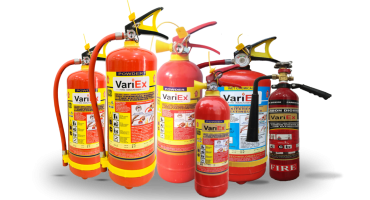 Read more +24 November 2023 in Fire Extinguisher
What types of fire extinguishers are available for different fire classes?
 Read more +02 May 2026 in Fire Extinguisher
Class B Fire Extinguisher Uses, Types, Price & Buying Guide
 Read more +30 April 2026 in ABC Fire Extinguisher, AMC Services, CO2 Fire Extinguisher, Fire Extinguisher, Fire Fighting System, FIre Hydrant, Fire Safety Equipment, Fire Safety Equipment