
- HOME
- CORPORATE
- PORTFOLIO
- PRODUCTS
- SERVICES
- CLIENTS
- CONTACT US
- MORE

Fire Immuniser
+91-7829629111
Email: info@variex.in
Varistor Technologies Pvt. Ltd.
Block-1, First Floor, Ardente Office One, Hoodi Circle, ITPL Main Road, Bengaluru, Karnataka 560048, IN
Fire Extinguisher Guide: Types, Uses, PASS Method & Safety Tips
Fire accidents can happen anytime at home, in offices, factories, kitchens, or vehicles. In such situations, a fire extinguisher becomes the first line of defense to control small fires before they turn into disasters. But many people still don’t fully understand what a fire extinguisher is, how it works, and when to use it.
In this complete guide, you will learn everything about fire extinguisher, including their types, working mechanism, and how to use them properly.
What Is a Fire Extinguisher?
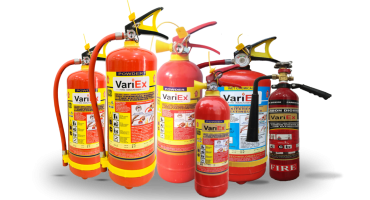
A fire extinguisher is a portable safety device designed to control or put out small fires during emergencies. It contains a special chemical or substance that can suppress flames by removing heat, oxygen, or fuel—the three essential elements required for fire.
Common Places Where Fire Extinguishers Are Used
| Location | Purpose |
|---|---|
| Homes | Control kitchen or electrical fires |
| Offices | Protect employees and equipment |
| Schools | Ensure student safety |
| Hospitals | Prevent fire hazards in sensitive areas |
| Industrial Facilities | Control machinery or chemical fires |
| Vehicles | Handle engine or fuel fires |
How Does a Fire Extinguisher Work?
Fire requires three elements to exist:
-
Heat – Energy that starts the fire
-
Fuel – Any material that burns (wood, paper, gas, oil)
- Oxygen – Supports the burning process
Main Parts of a Fire Extinguisher
-
Cylinder – Stores the extinguishing agent under pressure.
-
Pressure Gauge – Shows whether the extinguisher has the correct pressure.
-
Safety Pin – Prevents accidental discharge of the extinguisher.
-
Handle / Lever – Used to release the extinguishing agent when pressed.
-
Hose / Nozzle – Helps direct the extinguishing agent toward the fire.
Types of Fire Extinguishers
Comparison of Fire Extinguisher Types
| Type | Best For | How It Works |
|---|---|---|
| Water | Paper, wood, cloth | Cools the fire and reduces heat |
| Foam | Flammable liquids | Creates an oxygen-blocking foam layer |
| Dry Powder | Gas, electrical, liquid fires | Stops the chemical reaction of the fire |
| CO₂ | Electrical equipment | Removes oxygen and smothers the fire |
| Wet Chemical | Cooking oils & grease | Forms a cooling soap-like layer to suppress flames |
Read our detailed guide on fire extinguisher types
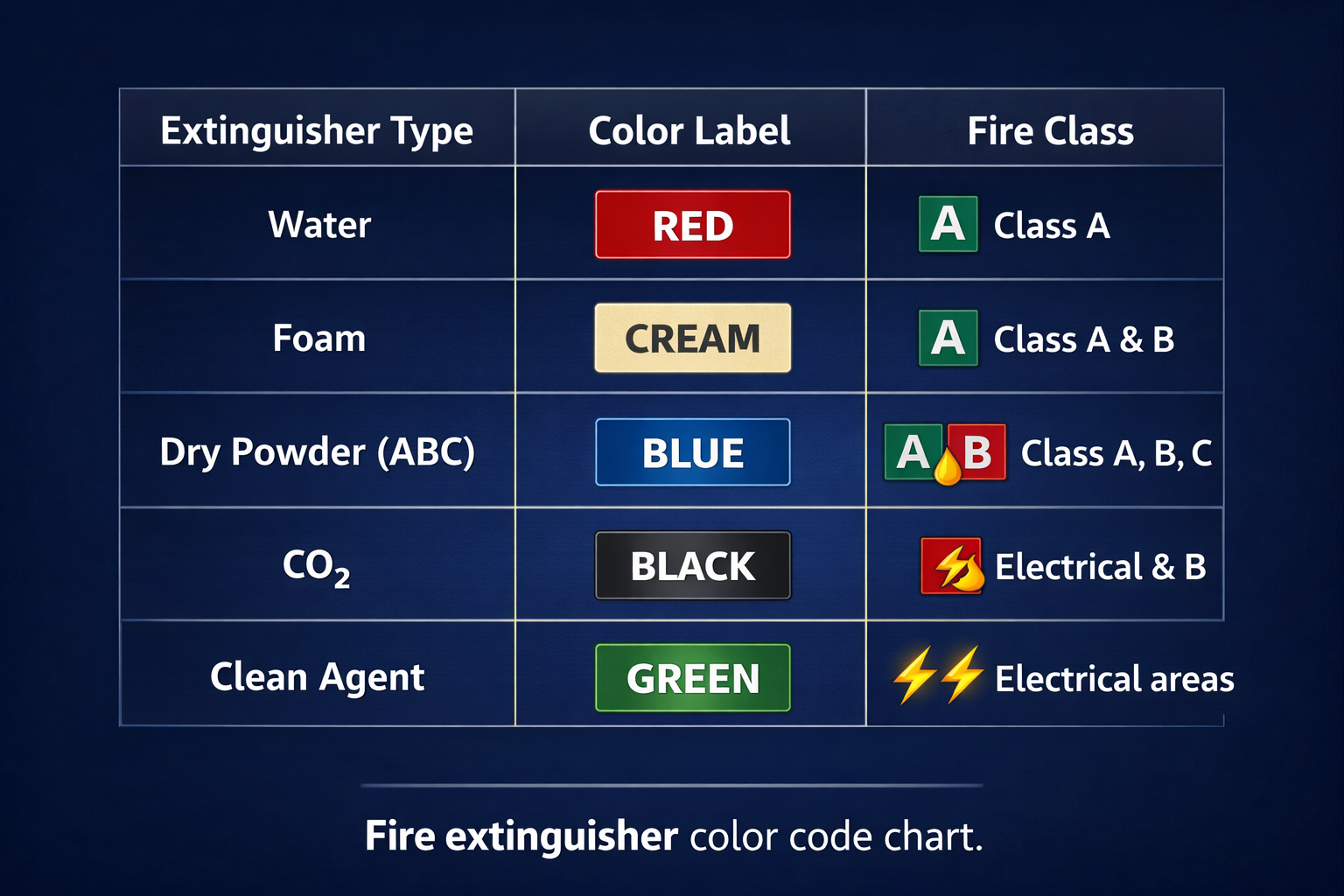
Fire Classes Explained
| Fire Class | Type of Fuel | Examples |
|---|---|---|
| Class A | Solid materials | Wood, paper, cloth |
| Class B | Flammable liquids | Petrol, oil, paint |
| Class C | Flammable gases | LPG, propane |
| Class D | Combustible metals | Magnesium, aluminum |
| Class K / F | Cooking oils | Frying oils, grease |
How to Use a Fire Extinguisher (PASS Method)
The PASS method is the easiest way to remember how to use a fire extinguisher.
| Step | Action | Description |
|---|---|---|
| P | Pull | Pull the safety pin |
| A | Aim | Aim at the base of the fire |
| S | Squeeze | Press the handle slowly |
| S | Sweep | Move the nozzle side to side |
Important Fire Extinguisher Safety Tips
-
Keep an exit behind you so you can escape safely.
-
Use extinguishers only for small fires.
-
Check the pressure gauge regularly to ensure it works properly.
-
Install extinguishers in visible and easy to access areas.
-
Train employees or family members to avoid panic during emergencies.
Why Fire Extinguishers Are Important
Fire extinguishers are essential safety tools because they:
-
Stop small fires before they spread
-
Help protect lives and property
-
Provide a quick response during emergencies
-
Reduce fire damage in homes and workplaces
How Often Fire Extinguishers Should Be Checked
| Inspection Type | Frequency |
|---|---|
| Visual inspection | Monthly |
| Professional servicing | Once a year |
| Pressure testing | Every 5–12 years |
Where Fire Extinguishers Should Be Installed
-
Kitchen – High risk of cooking fires
-
Garage – Fuel and vehicle fire hazards
-
Office corridors – Easy access for employees
-
Electrical rooms – Protection from equipment fires
-
Industrial areas – Machinery and chemical fire risks
Conclusion
Fire extinguishers are essential for quick fire control and safety in homes and workplaces. Knowing the right type and how to use it can stop small fires before they become dangerous.
Stay prepared, stay protected — the right fire extinguisher can make the difference between safety and disaster.
Recent Posts
-
Class B Fire Extinguisher Uses, Types, Price & Buying Guide
0... -
Why You Should Keep a Fire Extinguisher in Your Car
0... -

Warehouse Fire Safety: How to Choose the Right Fire Suppression System
0... -

Fire Extinguisher Refilling vs Buying New: Which Option is Safer & Cost-Effective?
0... -

Top 10 fire fighting Companies in India
0... -

Top 10 Fire Fighting Companies in Bangalore
0... -
How to Decide the Type and Capacity of a Fire Extinguisher
0... -
Fire Extinguisher Signs: Meaning, Types and Placement Guide
0... -

Top Fire Extinguisher Brands in India (2026)
0... -

What Is a Dry Chemical Fire Extinguisher? Uses, Working, and Safety Guide
0...
Frequently Asked Questions
A fire extinguisher is used to control or extinguish small fires before they spread and cause serious damage.
Common types include water, foam, dry powder, CO₂, and wet chemical extinguishers, each designed for different types of fires.
Use the PASS method: Pull the pin, Aim at the base of the fire, Squeeze the handle, and Sweep the nozzle side to side.
It should be visually inspected every month and professionally serviced at least once a year.
They should be placed in easily accessible areas like kitchens, offices, corridors, garages, and near electrical equipment.
Final Say
At VariEx.in and VariexOnline.com, we specialize in supplying and installing top-quality fire fighting systems and equipment. From fire extinguishers to advanced suppression systems, we offer comprehensive solutions tailored to your needs. Our experienced team ensures precise installation and maintenance for optimal safety.
Trust VariEx for reliable fire protection. Contact us online or call 7829629111 to learn more.
"WHAT YOU CAN READ NEXT"
 Read more +24 November 2023 in Fire Extinguisher
What types of fire extinguishers are available for different fire classes?
 Read more +02 May 2026 in Fire Extinguisher
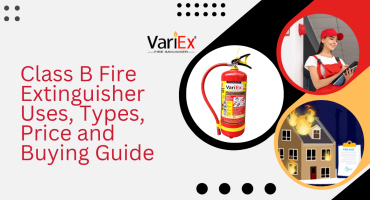
Class B Fire Extinguisher Uses, Types, Price & Buying Guide
 Read more +30 April 2026 in ABC Fire Extinguisher, AMC Services, CO2 Fire Extinguisher, Fire Extinguisher, Fire Fighting System, FIre Hydrant, Fire Safety Equipment, Fire Safety Equipment