
- HOME
- CORPORATE
- PORTFOLIO
- PRODUCTS
- SERVICES
- CLIENTS
- CONTACT US
- MORE

Fire Immuniser
+91-7829629111
Email: info@variex.in
Varistor Technologies Pvt. Ltd.
Block-1, First Floor, Ardente Office One, Hoodi Circle, ITPL Main Road, Bengaluru, Karnataka 560048, IN
Top 10 Benefits of DLP Refilling for Fire Safety Systems
Top 10 Benefits of DLP Refilling for Fire Safety Systems
Fire safety systems are vital for protecting lives and property in residential, commercial, and industrial environments. One critical maintenance process that ensures these systems remain effective is Direct Low Pressure (DLP) refilling. This technique is becoming the gold standard for fire extinguisher and suppression system maintenance due to its efficiency, safety, and cost-effectiveness.
In this article, we’ll explore the top 10 benefits of DLP refilling, helping safety managers, building owners, and facility operators make informed decisions that enhance fire preparedness and compliance.
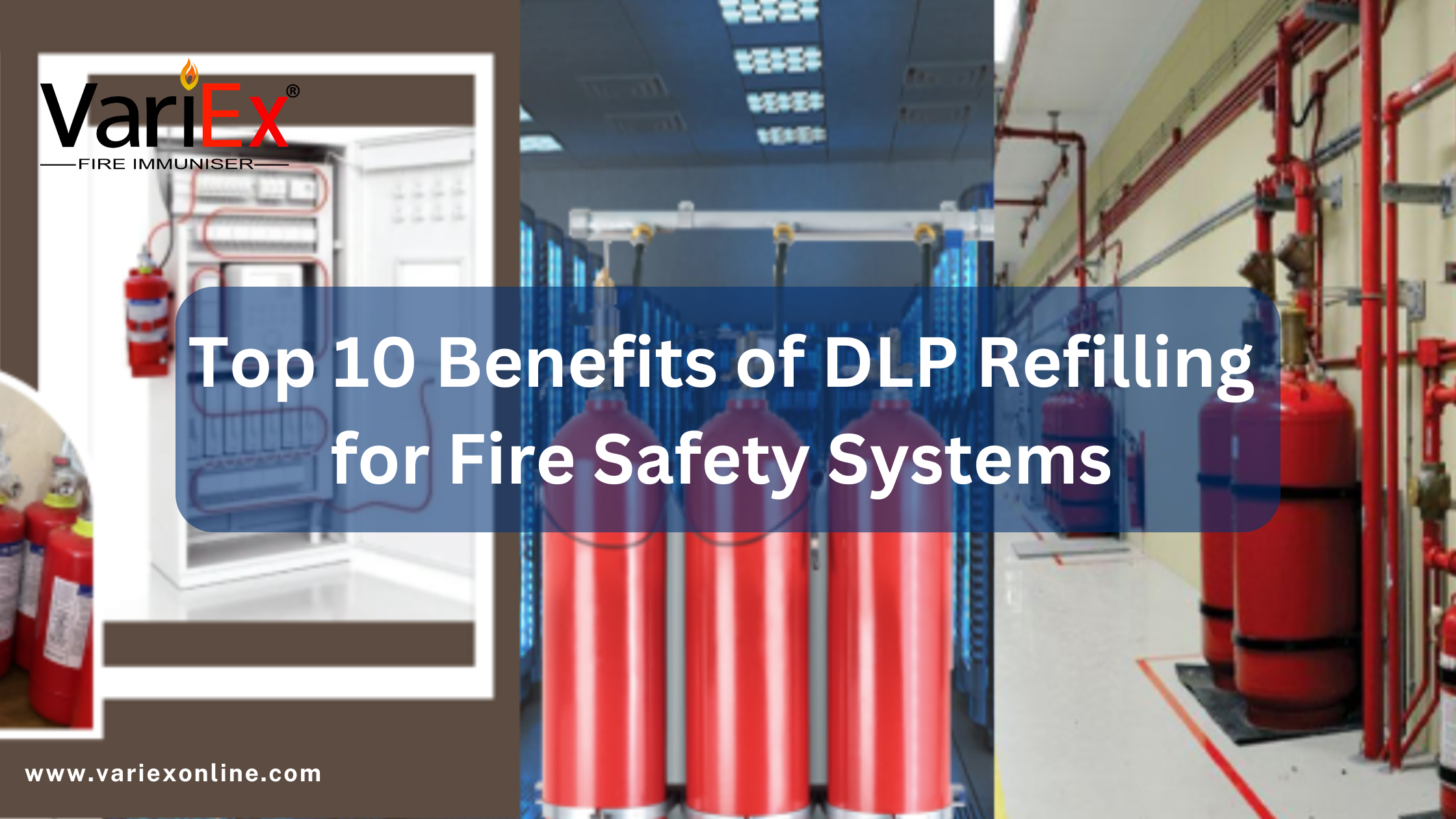
What Is DLP Refilling in Fire Safety Systems?
Direct Low Pressure (DLP) refilling refers to the process of refilling fire extinguishers or suppression systems using controlled, low-pressure techniques. Unlike traditional high-pressure refilling, DLP minimizes the risk of system damage, pressure fluctuations, and chemical waste.
Commonly applied to ABC dry chemical extinguishers, CO₂ systems, and clean agent fire suppression systems, DLP ensures that firefighting agents are refilled efficiently and safely, adhering to industry standards such as NFPA 10, ISO 11602, and OSHA guidelines.
Table: Key Differences Between DLP Refilling and Traditional Refilling
| Feature | DLP Refilling | Traditional Refilling |
|---|---|---|
| Pressure Levels | Low & Controlled | High & Variable |
| Equipment Wear & Tear | Minimal | Higher risk of component wear |
| Risk of Over-Pressurization | Reduced | Elevated |
| Environmental Impact | Lower due to precise refilling | Higher due to potential chemical waste |
| Process Time | Faster, streamlined process | Longer, labor-intensive |
| Operational Downtime | Minimal | Prolonged |
| Technician Safety | Enhanced due to pressure control | Greater risk from high-pressure exposure |
| Regulatory Compliance | Easier to comply with NFPA & OSHA | Requires rigorous monitoring |
| Cost-Effectiveness | High due to reduced maintenance cycles | Lower initially but costly long-term |
| Suitable for Modern Agents | Yes | Limited |
Top 10 Benefits of DLP Refilling for Fire Safety Systems
1. Enhanced Safety for Technicians and Staff
DLP refilling uses controlled low-pressure environments, dramatically lowering the risk of accidents during the refilling process. Reduced pressure minimizes hazards like burst cylinders, chemical leaks, and mechanical failure, making the procedure safer for trained personnel.
2. Prolongs the Life of Fire Extinguishers and Systems
High-pressure refilling causes wear and tear on extinguisher cylinders and valve assemblies. By contrast, DLP refilling reduces mechanical stress, extending the usable life of expensive fire safety equipment, thus improving long-term ROI.
3. Improves Refilling Accuracy
Precision is crucial in fire safety. DLP systems allow technicians to measure and control the amount of agent refilled, ensuring each extinguisher is filled to the correct specification. This prevents overfilling or underfilling, which could impair extinguisher performance during emergencies.
4. Minimizes Environmental Impact
Environmental stewardship is an increasing priority. DLP refilling reduces chemical waste and prevents accidental agent discharges, making it a more eco-friendly option compared to older, less controlled methods.
5. Faster Refilling Reduces Operational Downtime
For businesses and industrial plants, downtime means lost productivity. DLP’s streamlined process reduces the time needed to inspect, discharge, refill, and recharge systems, allowing businesses to quickly return to normal operations.
6. Supports Compliance with Industry Standards
DLP refilling helps ensure compliance with fire safety standards such as NFPA 10, ISO 11602, and local safety regulations. Meeting these requirements helps avoid legal penalties, insurance issues, and safety violations.
7. Reduces Long-Term Maintenance Costs
Although DLP refilling systems may require upfront investment, they significantly cut long-term maintenance and replacement costs by reducing wear on components and minimizing emergency repairs.
8. Adaptable to Various Extinguisher Types
DLP technology can be used for ABC powder, clean agent, and CO₂ extinguishers, making it versatile across industries such as healthcare, manufacturing, and data centers.
9. Promotes Better Fire Safety Readiness
Proper refilling ensures that extinguishers and suppression systems are ready to perform optimally in an emergency, minimizing the risk of malfunction during a critical event.
10. Safer for Sensitive Environments
For locations such as hospitals, laboratories, and data centers, where precision and minimal disruption are vital, DLP refilling ensures maintenance can be performed without introducing high-pressure hazards or excessive noise.
Who Should Use DLP Refilling?
Industries and facilities that benefit the most from DLP refilling include:
-
Commercial and residential high-rise buildings
-
Hospitals and healthcare centers
-
Data centers and server farms
-
Manufacturing plants
-
Oil and gas facilities
-
Educational institutions
-
Retail and hospitality industries
Key Takeaways
The adoption of Direct Low Pressure refilling is more than a maintenance trend—it represents a smarter, safer, and more sustainable approach to fire safety system upkeep. Whether for a large industrial facility or a small commercial office, switching to DLP can deliver measurable safety and financial benefits.
Conclusion
DLP refilling is redefining fire safety maintenance by offering a safe, precise, and eco-friendly solution for refilling fire extinguishers and suppression systems. With enhanced safety for workers, improved compliance, and long-term cost savings, it’s clear why leading safety managers are making DLP their method of choice.
If you’re looking to upgrade your fire safety practices or streamline your maintenance processes, partnering with a certified DLP refilling service provider is a step toward a safer, more compliant future.

Frequently Asked Questions
Typically, fire extinguishers should be refilled every 1 to 5 years, depending on the type and manufacturer recommendations, with regular inspections ensuring optimal pressure and readiness.
Yes, many service providers offer mobile DLP refilling services, allowing refilling to be performed on your premises, minimizing downtime.
DLP refilling works with most portable extinguishers, including ABC dry chemical, clean agent, and CO₂ extinguishers, but always verify compatibility with your provider.
It reduces chemical waste and energy consumption by using precise, controlled refilling processes that minimize environmental impact.
While the initial service may be slightly higher, DLP significantly lowers long-term costs by extending equipment life and reducing failure rates.
Buy Fire Extinguishers Online ----------------------
Check Our Complete Fire Extinguishers Price List.

Final Say
At VariEx.in and VariexOnline.com, we specialize in supplying and installing top-quality fire fighting systems and equipment. From fire extinguishers to advanced suppression systems, we offer comprehensive solutions tailored to your needs. Our experienced team ensures precise installation and maintenance for optimal safety.
Trust VariEx for reliable fire protection. Contact us online or call 7829629111 to learn more.
We specialize in manufacturing, supplying, and distributing a comprehensive range of fire fighting equipment, including state-of-the-art fire extinguishers. Read our most searched blogs and find interesting information on topics such as how to use a fire extinguisher, how to calculate fire fighting water tank capacity, fire extinguisher refilling, obtaining a Fire NOC, understanding fire fighting systems, types of fire protection systems, the fire hydrant system, and the fire sprinkler system. These resources provide essential knowledge for ensuring safety and compliance with fire safety regulations. Additionally, you can explore guides on the maintenance of fire protection equipment, the latest advancements in fire safety technology, and best practices for fire risk assessment and management.
Our expertise extends to fire alarm systems, fire hydrant systems, and fire suppression systems, including fire sprinklers. Each product meets rigorous international standards for reliability and performance, ensuring effective fire safety products tailored to diverse applications and industries. Additionally, we are providing Fire Extinguisher Refilling and AMC services to ensure ongoing maintenance and operational readiness of fire safety equipment.
"WHAT YOU CAN READ NEXT"
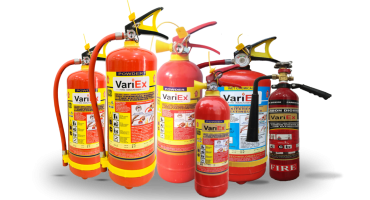 Read more +24 November 2023 in Fire Extinguisher
What types of fire extinguishers are available for different fire classes?
 Read more +02 May 2026 in Fire Extinguisher
Class B Fire Extinguisher Uses, Types, Price & Buying Guide
 Read more +30 April 2026 in ABC Fire Extinguisher, AMC Services, CO2 Fire Extinguisher, Fire Extinguisher, Fire Fighting System, FIre Hydrant, Fire Safety Equipment, Fire Safety Equipment