

- HOME
- CORPORATE
- PORTFOLIO
- PRODUCTS
- SERVICES
- CLIENTS
- CONTACT US
- MORE

Fire Immuniser
+91-7829629111
Email: info@variex.in
Varistor Technologies Pvt. Ltd.
Block-1, First Floor, Ardente Office One, Hoodi Circle, ITPL Main Road, Bengaluru, Karnataka 560048, IN
Benefits of ERT (Emergency Response Team) Training in Fire Safety
Emergency Response Team (ERT) training in fire safety is crucial for organizations aiming to create a safe and prepared workplace environment. Here are several key benefits that highlight the importance of investing in ERT training.
What is ERT Training?
ERT training educates individuals on fire safety protocols, emergency response procedures, and the operation of firefighting equipment. It includes theoretical instruction and practical simulations to ensure participants can handle various emergency scenarios confidently and efficiently.
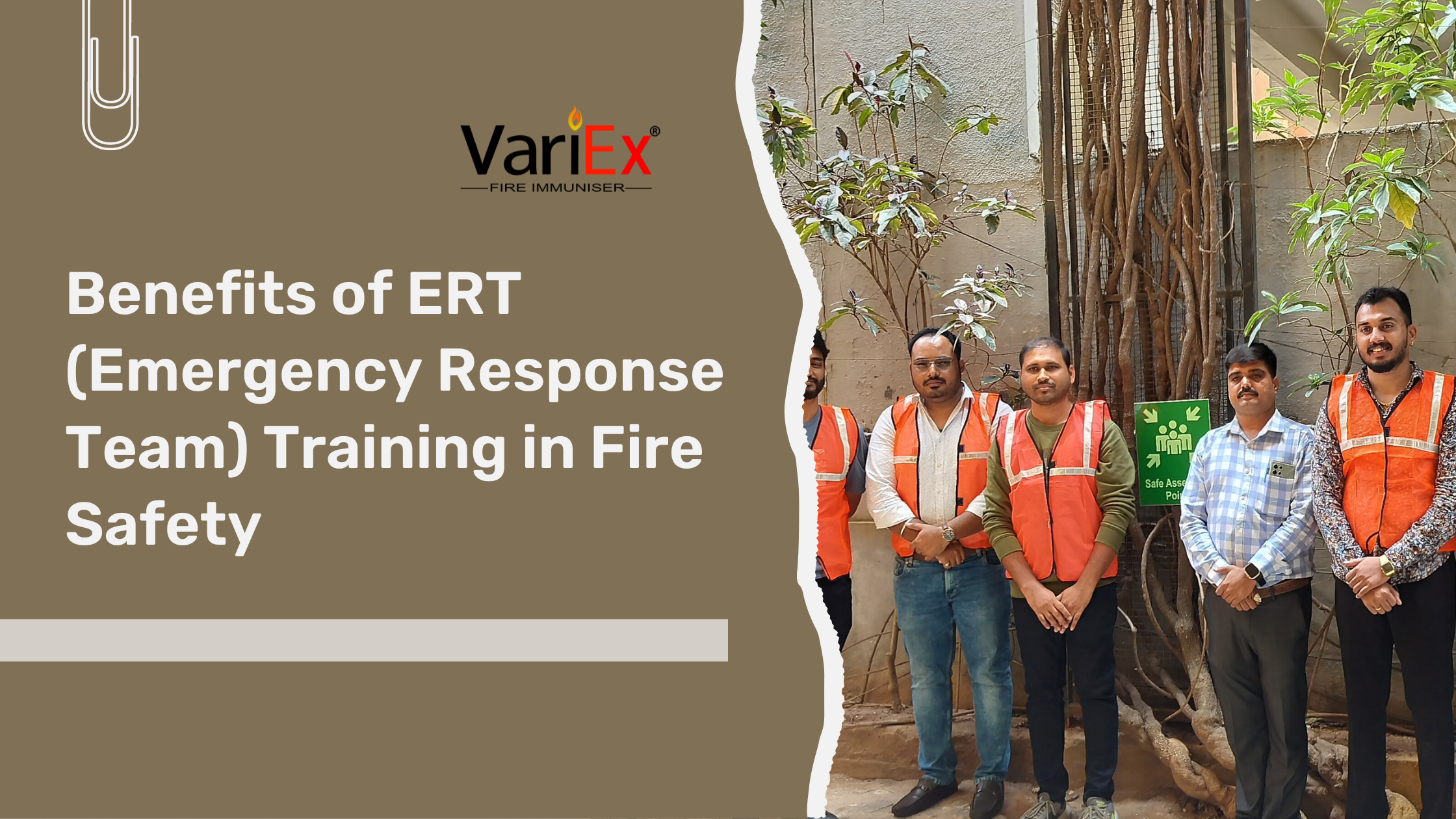
Benefits of ERT (Emergency Response Team) Training
1. Enhanced Emergency Response Capability
ERT training equips designated personnel with the skills and knowledge to respond swiftly and effectively during fire emergencies. Participants learn to assess situations, implement evacuation procedures, and utilize firefighting equipment properly. This capability ensures a proactive and organized response, minimizing potential harm to individuals and property.
2. Reduced Impact of Fire Incidents
Quick and efficient response by trained ERT members can significantly reduce the impact of fire incidents. They are prepared to contain small fires using fire extinguishers or initiate evacuation procedures promptly. This proactive approach helps in preventing the escalation of fires, thereby mitigating damage and reducing operational downtime.
3. Safety and Risk Management
ERT training emphasizes fire safety protocols and risk management strategies. Participants learn to identify fire hazards, conduct safety inspections, and implement preventive measures. This proactive risk management approach not only enhances workplace safety but also reduces the likelihood of fire incidents occurring in the first place.
4. Compliance with Regulations
Many industries have specific regulations and standards regarding emergency preparedness and fire safety. ERT training ensures that organizations comply with these legal requirements. By meeting regulatory standards, organizations demonstrate their commitment to maintaining a safe working environment and avoid potential fines or penalties.
5. Employee Confidence and Morale
Knowing that there are trained ERT members onsite instills confidence among employees. They feel assured that in case of a fire or other emergency, there are individuals equipped to handle the situation professionally. This confidence contributes to overall employee morale and a sense of security in the workplace.
6. Cost Savings
Investing in ERT training can lead to cost savings in several ways. By minimizing fire damage through quick response and effective containment, organizations reduce repair and replacement costs for damaged property and equipment. Additionally, operational downtime due to fire incidents is minimized, ensuring continuity of business operations.
7. Team Cohesion and Communication
ERT training fosters teamwork and improves communication among team members. Through regular drills and simulations, participants learn to work cohesively under pressure. Clear communication channels and defined roles during emergencies ensure a coordinated response, enhancing overall effectiveness.
8. Continuous Improvement
Regular ERT training sessions allow organizations to continuously improve their emergency response plans and procedures. Feedback from training exercises helps identify areas for improvement and updates to existing protocols, ensuring that ERT members are always prepared to handle new challenges and evolving threats.
In conclusion, ERT training is a vital investment for organizations committed to safeguarding their employees, assets, and operations from the devastating effects of fire emergencies. By empowering trained personnel with the necessary skills and knowledge, organizations can mitigate risks, comply with regulations, and foster a culture of safety and preparedness throughout the workplace.



Frequently Asked Questions
ERT stands for Emergency Response Team. It refers to a group of designated individuals within an organization trained to respond swiftly and effectively to fire emergencies and other crises.
ERT training is crucial because it prepares personnel to handle fire emergencies with confidence and competence. Trained ERT members can assess risks, initiate evacuation procedures, and use firefighting equipment, thereby reducing potential harm and minimizing damage.
The frequency of ERT training sessions depends on various factors, including industry regulations and organizational policies. Typically, refresher training should be conducted at least annually to ensure ERT members maintain their skills and stay updated on procedures and equipment.
Employees designated as part of the emergency response team should participate in ERT training. This includes fire wardens, safety officers, first aiders, and any personnel responsible for emergency response procedures and firefighting tasks within the organization.
Investing in ERT training can lead to financial benefits by reducing the impact of fire incidents. Trained ERT members can minimize property damage and operational downtime through quick and effective response, thereby saving on repair costs and maintaining business continuity.
Final Say
At VariEx.in and VariexOnline.com, we specialize in supplying and installing top-quality fire fighting systems and equipment. From fire extinguishers to advanced suppression systems, we offer comprehensive solutions tailored to your needs. Our experienced team ensures precise installation and maintenance for optimal safety.
Trust VariEx for reliable fire protection. Contact us online or call 7829629111 to learn more.
"WHAT YOU CAN READ NEXT"
 Read more +24 November 2023 in Fire Extinguisher
What types of fire extinguishers are available for different fire classes?
 Read more +02 May 2026 in Fire Extinguisher
Class B Fire Extinguisher Uses, Types, Price & Buying Guide
 Read more +30 April 2026 in ABC Fire Extinguisher, AMC Services, CO2 Fire Extinguisher, Fire Extinguisher, Fire Fighting System, FIre Hydrant, Fire Safety Equipment, Fire Safety Equipment